
Selling a house as is in Ohio means transferring ownership in its current condition, without making repairs or renovations before closing. Ohio law still requires you to disclose all known defects, even when selling as is. Cash buyers can close in as little as 7–14 days, compared to the 60–90 days a traditional sale typically takes. Understanding your legal obligations, pricing your home realistically, and choosing the right buyer type are the three decisions that determine how fast you close and how much you walk away with.
What does selling a house as is in Ohio actually mean?
Selling as is is the industry term for a sale where the seller makes no repairs and the buyer accepts the property in its current state. The phrase does not mean “no rules apply.” Ohio law is clear: you must complete the Residential Property Disclosure Form and report every known defect, from a leaky roof to a cracked foundation.
The biggest misconception Ohio homeowners carry into an as-is sale is that listing “as is” removes their disclosure duty. It does not. The disclosure form is mandatory regardless of how the listing is marketed. Buyers can still schedule inspections, and they often use inspection findings to negotiate the price down.
Sellers choose the as-is route for real reasons: inherited properties in poor condition, financial hardship, divorce, job relocation, or simply a home that needs more work than the owner can afford. The as-is path trades a higher sale price for speed and convenience. Knowing that trade-off upfront keeps expectations realistic.
What legal and disclosure obligations do Ohio sellers have?
Ohio’s disclosure requirements apply to every residential sale, and as-is listings are no exception. You must fill out the Ohio Residential Property Disclosure Form and hand it to every prospective buyer before they sign a purchase agreement. Skipping this step is not a technicality. It is a legal risk.
Ohio is technically a “buyer beware” state, but the fraudulent concealment exception overrides that protection. If you knowingly hide a defect and the buyer discovers it after closing, you can face a lawsuit. Courts have sided with buyers in these cases, even years after the sale.
What you must disclose includes:
- Structural problems: foundation cracks, roof damage, or water intrusion
- Mechanical system issues: HVAC, plumbing, or electrical defects
- Environmental hazards: lead paint, radon, mold, or asbestos
- Legal encumbrances: liens, easements, or zoning violations
- Neighborhood nuisances: known flooding, noise issues, or boundary disputes
Pro Tip: Write your disclosures in plain language. Vague entries like “some roof wear” invite disputes. Specific entries like “active leak in northeast corner of attic, observed in march 2025” protect you legally and build buyer trust.
Transparency upfront shields you legally and helps you price the home appropriately, which reduces post-sale disputes. Buyers who know what they are buying are far less likely to come back after closing.
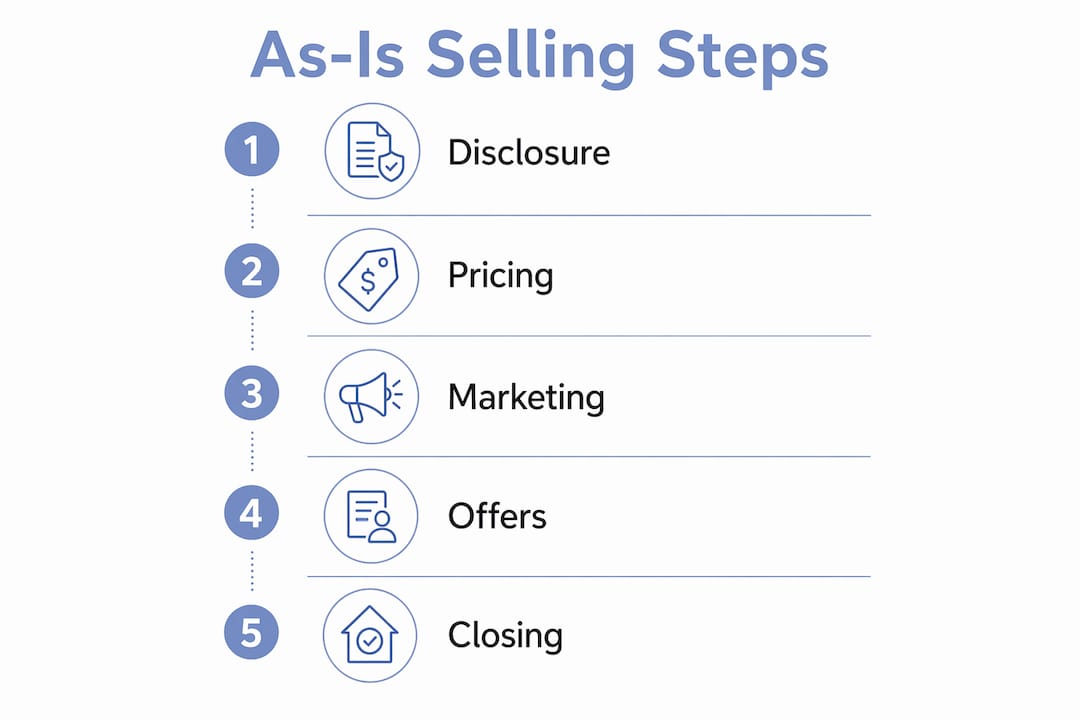
How to price your Ohio house accurately when selling as is
Realistic pricing is the single biggest factor in how fast your as-is home sells. Emotional attachment to a property causes sellers to overprice, which leads to longer time on market and eventual price cuts that signal desperation to buyers. Sellers who factor repair costs early obtain better net proceeds and reduce their total sales time.
The Ohio median sale price is approximately $225,000, with an average of 38 days on market statewide. That number is your starting benchmark, not your target. An as-is home sells below median because the buyer absorbs the repair costs.
Use this four-step method to set a defensible price:
- Pull comparable sales. Find three to five homes sold within the past 90 days in your zip code. Focus on homes of similar size and age.
- Estimate repair costs. Get at least two contractor quotes for the major issues you disclosed. Add 15% for surprises.
- Subtract from market value. Deduct the full repair estimate from the comparable sale price. This is your realistic ceiling.
- Factor in buyer profit margin. Cash investors typically target a return on their purchase. Cash buyers often offer around 70% of market value, while agent-listed as-is homes may net 80–85%.
Pricing below your emotional number is not losing. It is choosing certainty over a longer, riskier process.
What steps should Ohio homeowners take to prepare and market an as-is house?
Preparation for an as-is sale is not about fixing things. It is about organizing information so buyers can make fast, confident decisions. The more documentation you provide upfront, the fewer delays you face during due diligence.
Gather these documents before you list:
- Utility bills from the past 12 months (buyers want to know operating costs)
- Any repair records or warranties still in effect
- HOA documents, rules, and fee schedules if applicable
- Survey or plot plan if available
- Permits for any additions or major work done on the property
Professional photography still matters for as-is homes. Clean, well-lit photos attract more buyers and set accurate expectations. A buyer who arrives at a showing already knowing the condition is a more serious buyer. Surprises at showings kill deals.
Marketing an as-is home works through three main channels. A real estate agent who specializes in distressed or value-add properties knows how to position the listing and attract the right buyers. For-sale-by-owner (FSBO) saves on commission but requires more time and negotiation skill from you. Selling directly to cash buyers or Ohio real estate investors skips the listing process entirely and delivers the fastest path to closing.

Pro Tip: Include a one-page property summary sheet in your listing. List the known issues, estimated repair costs, and recent utility averages. Buyers who see this level of detail trust the seller and move faster.
What are the fastest and most effective ways to sell a house as is in Ohio?
Speed and net proceeds move in opposite directions in as-is sales. The faster you need to close, the more you typically give up in price. Knowing where each method lands on that spectrum lets you choose based on your actual priorities.
| Method | Typical timeline | Seller costs | Net proceeds |
|---|---|---|---|
| Cash buyer or investor | 7–14 days | Minimal to none | ~70% of market value |
| Agent-listed as-is | 38–90 days | 5–6% commission | ~80–85% of market value |
| FSBO as-is | 45–90 days | Minimal agent fees | Variable, buyer-dependent |
Standard Ohio sales take 60–90 days from listing to closing. Cash sales bypass financing contingencies, appraisals, and lender timelines entirely. That is why cash buyers can close in a fraction of the time.
Agent-listed as-is sales reach a wider pool of buyers and can generate competing offers, which pushes the price up. The trade-off is time and commission costs of 5–6%. On a $225,000 home, that commission runs $11,250 to $13,500 before other closing costs.
FSBO works best when you already have a buyer lined up, such as a neighbor, family member, or investor contact. Without an existing buyer, FSBO as-is listings tend to sit longer because they get less exposure than agent-listed properties.
Pro Tip: Request proof of funds from any cash buyer before signing a purchase agreement. A legitimate investor provides a bank statement or letter from their lender within 24 hours. Delays on this request are a red flag.
What common mistakes should Ohio sellers avoid when selling as is?
The most expensive mistake in an as-is sale is emotional pricing. Sellers attach memories and personal value to a home that buyers simply do not share. Overpricing an as-is property does not result in a higher sale. It results in a longer listing period, multiple price reductions, and a final sale price lower than a correctly priced listing would have achieved.
Buyers who see a price reduction on an as-is listing assume something is wrong beyond what was disclosed. Price it right the first time and you control the narrative.
Ignoring inspection results is the second major mistake. Buyers retain inspection rights in most as-is contracts unless the purchase agreement explicitly waives them. When an inspection reveals issues you did not disclose, the buyer gains leverage to renegotiate or walk away. Disclose everything you know and price accordingly. That eliminates the inspection as a negotiation weapon.
Closing costs catch many sellers off guard. Ohio seller closing costs typically run 7–10% of the sale price when you include commissions, title fees, transfer taxes, and prorated property taxes. On a $200,000 sale, that is $14,000 to $20,000 out of your proceeds. Cash sales with direct buyers often eliminate the commission portion and reduce several of these fees.
A real estate attorney is not required in Ohio, but attorney fees of $500–$1,000 are worth it for complex situations like probate sales, title disputes, or properties with liens. Title companies handle standard closings, but an attorney adds protection when the transaction has legal complications.
Key Takeaways
Selling a house as is in Ohio requires full legal disclosure, realistic pricing based on repair costs, and a clear choice between speed and net proceeds.
| Point | Details |
|---|---|
| Disclosure is mandatory | Ohio law requires the Residential Property Disclosure Form on every sale, including as-is listings. |
| Price below market value | Subtract full repair costs from comparable sales to set a price buyers will act on quickly. |
| Cash buyers close fastest | Cash sales close in 7–14 days versus 60–90 days for traditional financed sales. |
| Closing costs reduce proceeds | Ohio seller closing costs run 7–10% of the sale price; factor this in before you set your floor price. |
| Inspection rights usually remain | Buyers can still inspect as-is properties unless the contract explicitly waives that right. |
What I’ve learned from watching Ohio sellers navigate as-is sales
Most sellers come to an as-is sale thinking the hard part is finding a buyer. The hard part is actually the pricing conversation with themselves. I have watched homeowners leave real money on the table not because they chose the wrong buyer, but because they priced too high out of hope, then accepted a lower offer three months later after the listing went stale.
The sellers who do best are the ones who treat the as-is sale like a business transaction from day one. They get contractor quotes before they list. They fill out the disclosure form thoroughly. They know their walk-away number before the first offer arrives. That preparation removes emotion from the negotiation and keeps the deal moving.
Ohio’s disclosure laws are not the obstacle sellers think they are. Full transparency actually speeds up the sale. Buyers who know exactly what they are buying skip the back-and-forth and move to contract faster. I have seen well-documented as-is listings close in under three weeks on the open market because the seller gave buyers everything they needed to feel confident.
The one thing I would tell every Ohio homeowner considering an as-is sale: get your numbers right before you pick your method. Know what the home is worth repaired, know what repairs cost, and know what you need to walk away with. Everything else, including which buyer type to pursue, follows from those three numbers.
— Travis
How Decostabuyshomes helps Ohio sellers close fast
Ohio homeowners who need a fast, no-repair sale have a direct option with Decostabuyshomes. The process skips the listing, the showings, and the repair negotiations entirely.
Decostabuyshomes buys homes in as-is condition across Ohio, with no commissions, no repair requirements, and no lender delays. You get a cash offer, a clear timeline, and a closing date that works for your schedule. There are no hidden fees eating into your proceeds. If you want to know what your home is worth as a direct cash sale, contact Decostabuyshomes for a free, no-obligation offer and get a number you can actually plan around.
FAQ
Does selling as is in Ohio mean I don’t have to disclose defects?
No. Ohio law requires sellers to complete the Residential Property Disclosure Form on every sale, including as-is listings. Failing to disclose known defects can result in a lawsuit for fraudulent concealment.
How long does an as-is home sale take in Ohio?
A cash buyer sale closes in 7–14 days. A traditional agent-listed as-is sale typically takes 60–90 days from listing to closing.
Will buyers still inspect an as-is home in Ohio?
Yes. Buyers retain inspection rights in most as-is contracts unless the purchase agreement explicitly waives them. Sellers cannot use the as-is label to block inspections.
What price should I expect for an as-is home in Ohio?
Cash buyers typically offer around 70% of market value. Agent-listed as-is homes may net 80–85% of market value, depending on condition and location.
Do I need a real estate attorney to sell as is in Ohio?
An attorney is not required, but is worth the $500–$1,000 fee for complex situations like probate sales, properties with liens, or title disputes. Title companies handle standard closings.