
Selling a mobile home in a trailer park is a legally distinct process that depends on title status, park management approval, and buyer qualification criteria. Unlike selling a site-built home, most trailer park homes are classified as personal property, which means the transfer process resembles a vehicle sale more than a real estate closing. Get the classification wrong and every document that follows is built on a shaky foundation. This guide walks you through each stage: legal prep, repairs, park rules, marketing, and closing, so you can sell your home with confidence and without costly delays.
How do you determine legal status and prepare paperwork when selling a mobile home in a trailer park?
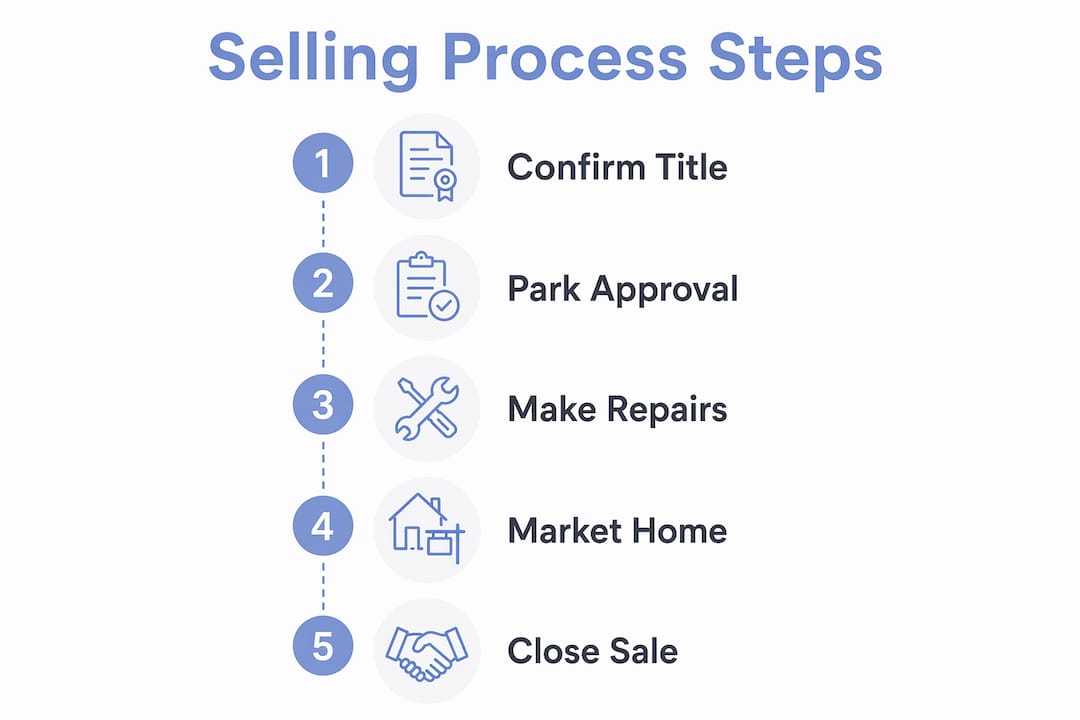
The first thing you must confirm is whether your home is personal property or real property. Most trailer park homes are personal property with a DMV-issued title, not a deed. That distinction controls every document in your sale. If your home has been permanently affixed to land you own, it may have been converted to real property and recorded with a deed. If you are unsure, contact your county property appraiser or your state’s DMV to verify the classification early. Incorrect classification causes paperwork errors that delay or kill the sale.
Once you confirm classification, gather these core documents:
- Certificate of title (or deed, if converted to real property)
- HUD compliance plate number and VIN, confirmed to match the title
- Lien release letters from any lender or lienholder
- Park lease agreement and your current tenant history
- State title transfer form (processed at the DMV in most states)
- Bill of sale signed by both parties
State title transfer fees typically run $50–$150, though the exact amount varies by state. That is a small cost compared to the delays caused by missing paperwork.
Pro Tip: Request a title search before you list. If the name on the title does not exactly match your legal name today, correct it now. A mismatch is the single most common reason deals collapse in the final week.
| Document | Purpose |
|---|---|
| Certificate of title | Proves legal ownership and enables transfer |
| HUD compliance plate | Confirms federal manufacturing standards |
| Lien release | Clears any outstanding debt against the home |
| Park lease agreement | Shows buyer the lot terms they will assume |
| State transfer form | Completes the legal ownership change |
What repairs actually increase value before you sell your trailer home?
Repair spending on a mobile home follows a strict rule: fix what buyers will reject, not what looks nice to you. Sellers should budget $1,500–$5,000 for targeted repairs that protect value and buyer confidence. That budget goes furthest when spent on structural and functional issues first, cosmetic upgrades second.
- Check the subfloor for water damage. Soft spots near the bathroom or kitchen are deal killers. Replacing a section of subfloor costs far less than losing a buyer.
- Inspect the marriage wall alignment on double-wides. A misaligned marriage wall signals settling or foundation problems and will surface in any inspection.
- Replace worn skirting. Damaged skirting raises red flags about pest intrusion and moisture. New vinyl skirting is inexpensive and dramatically improves first impressions.
- Install LVP flooring in high-traffic areas. Luxury vinyl plank is affordable, durable, and appeals to buyers who expect a move-in-ready home.
- Verify the home is level. An unlevel home causes doors to stick, floors to warp, and roof seals to fail. Releveling is a technical fix that pays back in buyer confidence.
- Seal all roof and window seams. Water intrusion is the top structural complaint in mobile home inspections. A tube of sealant costs almost nothing.
- Neutralize the interior. Fresh paint in a neutral color, decluttered rooms, and clean windows cost little but make the home photograph and show well.
Pro Tip: Hire a licensed mobile home inspector before listing. A clean inspection report is a marketing asset. It removes buyer doubt and gives you leverage to hold your asking price.
Prioritizing legal and structural integrity over curb appeal is the correct order of operations. Buyers can overlook dated décor. They cannot overlook a clouded title or a spongy floor.

How do park rules affect your sale and buyer approval?
Park management holds real power in your sale, but that power has legal limits. State laws protect your right to sell your home in place without forced removal. The park cannot require you to move the home off the lot as a condition of sale. What the park can do is screen the incoming buyer for lot tenancy.
Typical buyer qualification criteria include:
- Income verification: buyers usually need to show income of 2.5–3 times the monthly lot rent
- Background check: criminal history screening is standard at most parks
- Credit review: some parks set a minimum credit score threshold
- References: prior rental or tenancy history may be requested
Park management typically has 15 business days to respond to a buyer’s qualification application. In some states, no response within that window is treated as automatic approval. Track that deadline in writing and follow up before it expires.
Give your buyer the full application package before they submit it. Include the park rules, the current lot rent amount, and any pet or vehicle policies. A complete application moves faster and reduces the chance of rejection on a technicality. Common rejection reasons include incomplete income documentation, a criminal record that violates park policy, or a buyer who simply cannot meet the income threshold. If the park rejects a qualified buyer without cause, consult a housing attorney. Many states have specific legal recourse provisions for sellers in this situation.
What are the best ways to market your mobile home and find qualified buyers?
Pricing and marketing a mobile home in a trailer park requires a different approach than marketing a site-built home. The buyer pool is smaller, financing options are more limited, and park approval adds a step that can disqualify buyers late in the process.
- Research comparable sales first. Look at recent sales of similar homes in the same park and nearby parks. Price based on condition, age, size, and lot rent, not on what you paid or what you owe.
- Write ads that address buyer concerns directly. State the title status, the park approval process, and the lot rent upfront. Buyers who are surprised by these details later will walk away.
- List on Facebook Marketplace, Craigslist, and local community boards. These platforms reach buyers actively searching for affordable housing in specific areas. Include clear photos of every room, the exterior, and the skirting.
- Screen buyers before accepting offers. Ask about their financing method (cash, chattel loan, or personal loan) and whether they have reviewed the park’s qualification requirements. A buyer who cannot qualify for lot tenancy cannot close.
- Use written agreements from the start. A signed purchase agreement with a clear timeline protects both parties and reduces the chance of a buyer backing out without consequence.
Keeping a written checklist of all required documents and records speeds up closing and cuts deal cancellations. Share that checklist with your buyer early so they know exactly what to prepare.
What steps close the sale and what pitfalls should you avoid?
The closing process for a manufactured home sale is shorter than a traditional real estate closing, but it has its own failure points. Most deal failures in the final week trace back to title gaps, where ownership names mismatch or the title history is incomplete. Resolve any title gaps with a bonded title or an affidavit of ownership before you list, not after you have a buyer.
Key closing steps:
- Complete a final walk-through with the buyer to confirm the home’s condition matches what was agreed
- Sign the state title transfer form and submit it to the DMV or appropriate state agency
- Provide the buyer with the original title (or deed if applicable) and the bill of sale
- Settle all outstanding lot rent and utility balances before the transfer date
- Confirm park approval in writing before signing over the title
Post-sale tax considerations matter too. If you sell the home for more than your adjusted cost basis, you may owe capital gains tax. If you have claimed depreciation on the home as a rental, depreciation recapture applies. Consult a tax professional before closing if either situation applies to you. Thorough documentation and proactive communication with the park reduce delays and protect both parties through the final transfer.
Key Takeaways
Selling a mobile home in a trailer park requires confirmed title status, park approval coordination, targeted repairs, and complete documentation before any marketing begins.
| Point | Details |
|---|---|
| Confirm legal classification first | Verify personal vs. real property status at the DMV or county appraiser before preparing any documents. |
| Resolve title gaps before listing | Mismatched ownership names cause most last-minute deal failures; use a bonded title or affidavit to fix them early. |
| Budget repairs strategically | Spend $1,500–$5,000 on structural fixes and LVP flooring before cosmetic upgrades to protect buyer confidence. |
| Track park approval deadlines | Parks have 15 business days to respond; document every communication and follow up before the deadline. |
| Screen buyers before accepting offers | Confirm financing method and park qualification eligibility before signing a purchase agreement. |
What I’ve learned from watching mobile home deals fall apart
I have seen sellers spend $3,000 on new countertops and fresh paint, then lose the deal in the final week because the title still had a lienholder’s name on it from a loan paid off six years ago. That is the most expensive mistake in this process. The title is the foundation. Everything else is decoration.
The second thing I have learned is that sellers underestimate the park. Park management is not an obstacle. They are a required participant. Sellers who treat the park as an afterthought end up scrambling to get buyer applications processed while their purchase agreement deadline ticks down. The sellers who close cleanly are the ones who call the park office before they list, confirm the application process, and hand their buyer a complete package on day one.
Treat the sale as a documented process, not a casual transaction. High-performing sellers use checklists, track deadlines, and keep copies of every signed document. That discipline is what separates a smooth 30-day close from a three-month ordeal that ends with a buyer walking away. One more thing: do not confuse a deed with a title. A deed applies when the home is real property. Most homes in trailer parks are personal property with a DMV title. Mixing those up sends you to the wrong office, with the wrong forms, on the wrong timeline.
— Travis
Selling your mobile home faster with Decostabuyshomes
If the paperwork, park coordination, and repair decisions feel like more than you want to manage alone, there is a direct path forward.
Decostabuyshomes works directly with mobile home sellers across the United States, handling the title research, park communication, and documentation that slow most sales down. The process is built around your situation, not a one-size-fits-all offer. Whether your home needs repairs, has a complicated title history, or you simply want to close quickly without listing on the open market, Decostabuyshomes can walk you through your options with no obligation. Visit the site to request a free consultation and find out what your home is worth today.
FAQ
What is the difference between a mobile home title and a deed?
A title is issued by the DMV and applies to mobile homes classified as personal property, which covers most homes in trailer parks. A deed applies only when the home has been permanently affixed to land and converted to real property.
Can a trailer park force you to move your home when you sell it?
No. State laws protect sellers’ right to sell their mobile home in place. The park can screen the incoming buyer for lot tenancy but cannot require you to remove the home as a condition of sale.
How long does park approval take for a new buyer?
Park management typically has 15 business days to review a buyer’s application. Some states treat no response within that window as automatic approval, so tracking the deadline in writing is critical.
What paperwork do I need to sell my mobile home?
The core documents are the certificate of title, a lien release if applicable, the HUD compliance plate number, a signed bill of sale, the state title transfer form, and the park lease agreement.
What causes most mobile home sales to fall through?
Title gaps are the leading cause of last-minute deal failures. Mismatched ownership names or incomplete title history must be resolved with a bonded title or affidavit before listing.