
Cash home buyers are legitimate businesses that purchase residential properties directly from sellers, typically without mortgage financing, and close in as few as 7 days. The industry term for these operators is “direct home buyers” or “cash investors,” though most homeowners know them through “We Buy Houses” marketing. Are cash home buyers legit? The short answer is yes. Most operate legally and ethically. The longer answer is that the industry has no universal licensing requirement, which means your due diligence determines whether you walk away satisfied or shortchanged. This guide gives you the tools to tell the difference.
Are cash home buyers legit, and how does the process work?
Cash home buying is a legal, well-established real estate practice. Cash transactions close in 7–28 days, compared to 30–45 or more days with a financed buyer. That speed comes from removing the mortgage approval process, which eliminates the appraisal requirement, reduces contingencies, and cuts the paperwork load significantly.
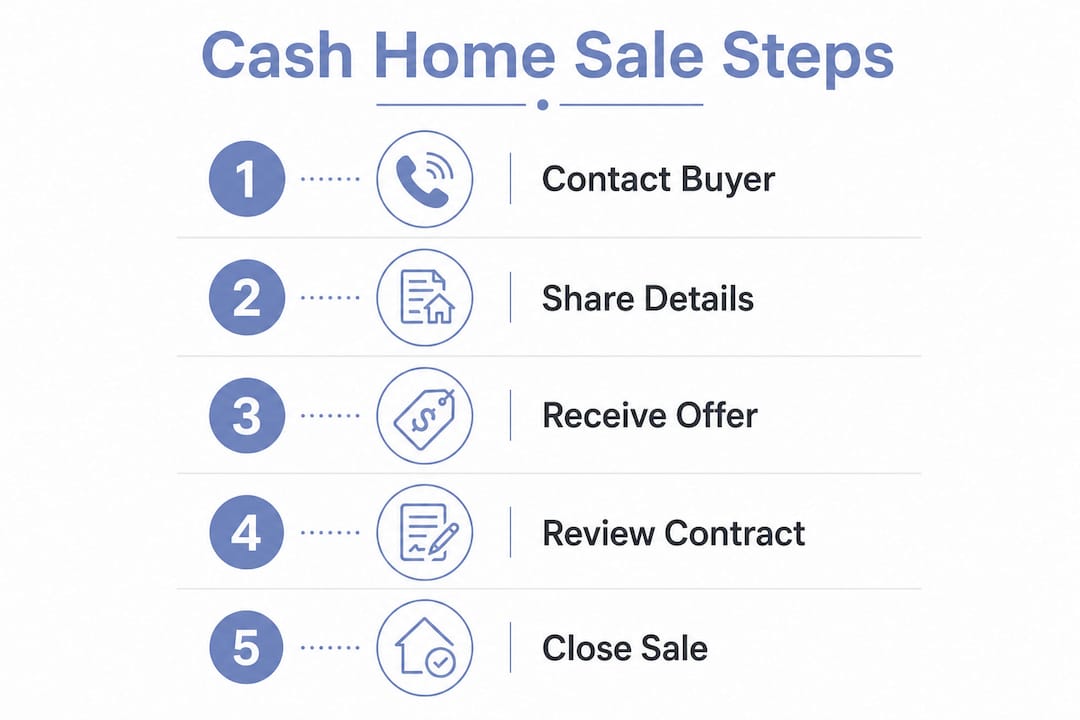
The typical cash sale follows four steps. First, you contact a cash buyer and share basic property details. Second, the buyer inspects the home, usually within days. Third, you receive a written offer, often within 24–48 hours. Fourth, you close at a title company or attorney’s office, and funds transfer the same day.

Cash buyers range widely in type and motivation. Real estate investors buy to flip or rent. iBuyers use automated pricing models to buy and resell at scale. High-net-worth individuals sometimes buy with cash simply to avoid financing delays. Each type has different pricing expectations and timelines, so knowing who you are dealing with shapes what offer you should expect.
Pro Tip: Ask every cash buyer to identify their exit strategy. An investor flipping the home will price differently than an owner-occupant paying cash. That one question tells you a lot about the offer you will receive.
What risks should homeowners watch for with cash buyers?
The biggest structural risk is the lack of regulatory oversight. Most “We Buy Houses” companies operate legally, but the industry does not require a real estate license or adherence to a code of ethics the way licensed agents do. That gap creates room for bad actors to operate alongside reputable ones.
The most common risk is a lowball offer. Cash buyers typically offer below market value because they purchase properties as-is and absorb all repair and renovation costs. A below-market offer is not automatically a scam. It reflects the buyer’s risk. The problem arises when a company quotes one price verbally and then reduces it at closing, a practice known as a bait-and-switch.
Watch for these red flags before signing anything:
- Pressure to sign quickly. Legitimate buyers give you time to review offers. Urgency is a manipulation tactic.
- No written contract. Any reputable buyer provides a formal purchase agreement before you commit.
- Upfront fees. Trustworthy cash buyers never charge sellers a fee to receive or process an offer.
- Requests for sensitive personal data. A buyer needs your property address and basic details, not your Social Security number or bank account information.
- No verifiable business address. A company with only a phone number and a generic website is a warning sign.
- Unresponsive or evasive communication. Reputable operators answer questions directly and in writing.
Pro Tip: Search the company name plus “reviews” and “BBB” before you respond to any offer. A pattern of unresolved complaints tells you more than any marketing claim.
How can you recognize reputable and trusted cash home buyers?
Reputable cash buyers share a consistent set of behaviors. Legitimate cash buyers provide proof of funds, present written contracts, and never charge upfront fees. Those three criteria alone filter out most bad actors.
Here is a practical verification checklist:
- Request proof of funds. A bank statement or letter from a financial institution confirms the buyer can actually close.
- Check BBB accreditation. Some cash buyer companies hold active BBB accreditation with verifiable business addresses and owner information. An A+ rating with a history of resolved complaints is a positive signal.
- Read third-party reviews. Google, Trustpilot, and the BBB all host seller reviews. Look for patterns, not individual outliers.
- Verify a business license. Many states require real estate investors to register as a business entity. A quick search of your state’s Secretary of State database confirms whether the company exists legally.
- Get everything in writing. A verbal offer means nothing. The written purchase agreement is the only document that matters legally.
Getting multiple offers is the single most effective protection you have. Comparing offers from several buyers gives you pricing context and negotiating power. A seller with one offer has no baseline. A seller with three offers knows exactly where the market sits.
| Verification step | What it confirms |
|---|---|
| Proof of funds | Buyer has capital to close |
| BBB accreditation check | Business history and complaint resolution |
| Third-party reviews | Real seller experiences |
| Written purchase agreement | Legal commitment and offer terms |
| Multiple competing offers | Fair pricing and negotiating leverage |
Decostabuyshomes provides written offers and proof of funds as standard practice, not as an exception. That transparency is the baseline you should expect from any cash buyer you consider.
When does selling to a cash buyer make sense?
A cash sale is the right choice in specific circumstances. Speed, certainty, and condition are the three factors that tip the decision toward a cash buyer rather than a traditional listing.
Homeowners who benefit most from cash sales include those facing foreclosure with a tight deadline, those inheriting a property they cannot maintain, those relocating for work with no time to manage a listing, and those owning homes that need significant repairs they cannot afford. In each case, the tradeoff of a lower sale price is worth the certainty and speed a cash buyer provides. You can read more about the full picture in this guide on selling a house as-is.
A traditional listing makes more sense when you have time, the home is in good condition, and maximizing sale price is the priority. A financed buyer in a competitive market will often pay closer to or above appraised value. The tradeoff is a longer timeline, more contingencies, and the possibility that a deal falls through due to financing.
| Factor | Cash sale | Traditional listing |
|---|---|---|
| Closing timeline | 7–28 days | 30–60+ days |
| Sale price | Below market value | At or near market value |
| Repairs required | None | Often required |
| Financing risk | None | Buyer financing can fall through |
| Contingencies | Minimal | Inspection, appraisal, financing |
| Best for | Speed, certainty, as-is condition | Maximum price, good condition |
The two approaches are not mutually exclusive. Some sellers get a cash offer first to establish a floor, then list traditionally to see if the market beats it. That strategy costs nothing and gives you real data before you commit.
Key Takeaways
Reputable cash home buyers are legitimate, verifiable businesses that offer a fast and certain sale in exchange for a below-market price, and due diligence separates trustworthy operators from bad actors.
| Point | Details |
|---|---|
| Cash sales are legal and common | Transactions close in 7–28 days, skipping appraisals and most contingencies. |
| Below-market offers are normal | Cash buyers price in repair costs and risk, not deception. |
| Verify before you sign | Proof of funds, BBB status, and written contracts confirm legitimacy. |
| Multiple offers protect you | Comparing three or more offers gives you pricing context and leverage. |
| Match the method to your situation | Cash sales suit speed and certainty; traditional listings suit maximum price. |
Travis’s take on navigating cash buyers without getting burned
The question I hear most often is not whether cash buyers are real. It is whether a specific company is trustworthy. That distinction matters. The industry is full of legitimate operators, but it also attracts opportunists who rely on seller urgency and information gaps.
My honest observation after working in this space is that the sellers who get the worst outcomes share one trait: they accepted the first offer they received. A single offer with no comparison point is not a negotiation. It is a guess. The sellers who do well treat cash offers like any other competitive process. They get multiple numbers, verify the buyer’s ability to close, and read the contract before signing.
Flashy marketing and aggressive outreach are not signs of legitimacy. They are signs of a high-volume acquisition model. The companies worth working with answer your questions directly, provide documentation without being asked, and do not pressure you toward a deadline you did not set. Transparency is not a bonus feature. It is the baseline.
If you are unsure whether a cash offer is fair, consult a local real estate agent for a comparative market analysis. That number costs you nothing and gives you a reference point for every offer you receive.
— Travis
Decostabuyshomes: a cash buyer built on transparency
Decostabuyshomes works with homeowners across the United States who need to sell quickly, sell as-is, or simply want certainty over a drawn-out listing process.
Every offer from Decostabuyshomes comes with proof of funds and a written purchase agreement. There are no upfront fees and no pressure tactics. If you are in Virginia, the Virginia as-is selling guide walks you through what to expect in that market specifically. Maryland homeowners can find the same detail in the Maryland as-is guide. Manufactured home owners have a dedicated resource at Decostabuyshomes as well. Whatever your situation, the goal is a fair offer you can verify and a closing process you can trust.
FAQ
Are cash home buyers legit in the United States?
Yes. Cash home buyers are legal businesses operating throughout the United States. Most are legitimate, though the industry lacks the licensing requirements that govern real estate agents, so verifying each company individually is necessary.
How much below market value do cash buyers typically offer?
Cash offers typically fall at 50–70% of fair market value, reflecting the buyer’s cost to repair and resell the property. A lower offer is not automatically a scam. It reflects the risk the buyer absorbs by purchasing as-is.
What makes a cash home buyer trustworthy?
Legitimate cash buyers provide proof of funds, present written contracts, and charge no upfront fees. BBB accreditation and verifiable third-party reviews add further confirmation.
How fast can a cash home sale close?
Most cash offers close in 7–14 days, compared to 30–45 or more days with a financed buyer. The exact timeline depends on title search completion and any agreed-upon terms in the purchase contract.
Should I get multiple cash offers before accepting one?
Yes. Getting offers from several buyers gives you pricing context and negotiating power. One offer gives you no baseline. Three or more offers tell you where the real market sits for your specific property.