
Selling a mobile home without land is entirely possible when you treat the home as personal property governed by a transferable title, not a real estate deed. Most manufactured homes on leased land are titled through the DMV or a state housing agency, making the sale process closer to selling a vehicle than a house. You still need to clear liens, satisfy park requirements, and prepare the home to attract buyers. Get those three things right, and you can close fast at a fair price.
What does it mean to sell a mobile home without land?
A mobile home sold without land is classified as personal property. Ownership transfers via title, not a deed, similar to how a car changes hands. That single fact shapes every step of the sale process, from the paperwork you file to the financing your buyer can access.
The term “manufactured home” is the federally recognized label for homes built to HUD standards after June 15, 1976. Older units are technically “mobile homes,” but both terms describe the same sale process when land is not included. Knowing this distinction matters because lenders and state agencies use the HUD designation to determine financing eligibility.
Three parties typically govern the sale: the DMV or state housing agency that holds the title record, the county assessor if the home has been converted to real property, and the mobile home park if the home sits on leased land. Ignoring any one of these can stall or kill your sale.
What documents and legal steps do you need to sell?
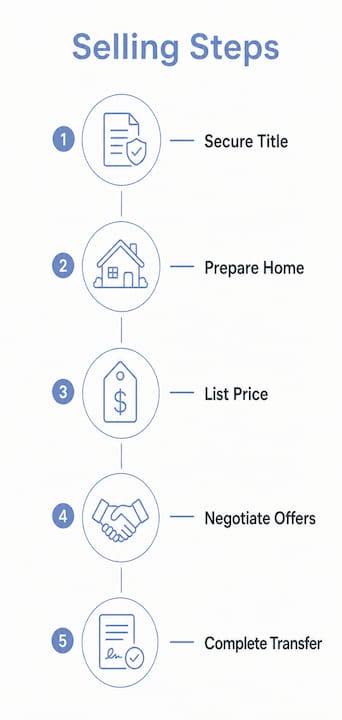
Clear title is the foundation of every manufactured home sale. The certificate of title functions like a car title and must be free of liens before you can transfer ownership. If you still owe money on the home, contact your lender to get a payoff amount and arrange to satisfy the lien at or before closing.
Key documents to gather before listing
- Certificate of title or certificate of ownership: Locate the original. If it is lost, apply for a duplicate through your state DMV or housing agency before you list.
- HUD certification label: This metal plate is attached to the exterior of the home. Missing HUD plates can derail buyer financing and must be verified or replaced through official channels before you list.
- Lien release: Get written confirmation from any lender that the lien has been satisfied.
- Park lease agreement: Review it for transfer clauses, buyer approval requirements, and any fees due at sale.
- Bill of sale: A signed bill of sale documents the agreed price and terms for both parties.
Title transfer process
Once the sale is agreed upon, both parties sign the title. You submit the signed title, a completed transfer application, and the applicable fee to your state DMV or housing agency. Processing times vary by state, typically ranging from a few days to several weeks. Some states also require a tax clearance certificate confirming no back property taxes are owed on the home.
| Document | Purpose | Where to obtain |
|---|---|---|
| Certificate of title | Proves ownership and enables transfer | State DMV or housing agency |
| HUD certification label | Required for buyer financing approval | Exterior of home or HUD label office |
| Lien release | Confirms no outstanding loans | Your lender |
| Park lease transfer addendum | Satisfies park approval requirements | Park management office |
| Bill of sale | Records sale terms | Draft with buyer at closing |
How do you prepare your mobile home to attract buyers and maximize value?
A 3-step preparation approach produces the best results: secure your legal right to sell first, confirm structural integrity second, then apply surface-level aesthetic updates. Skipping the first two steps and jumping straight to cosmetics is the most common seller mistake.
Structural repairs that matter most
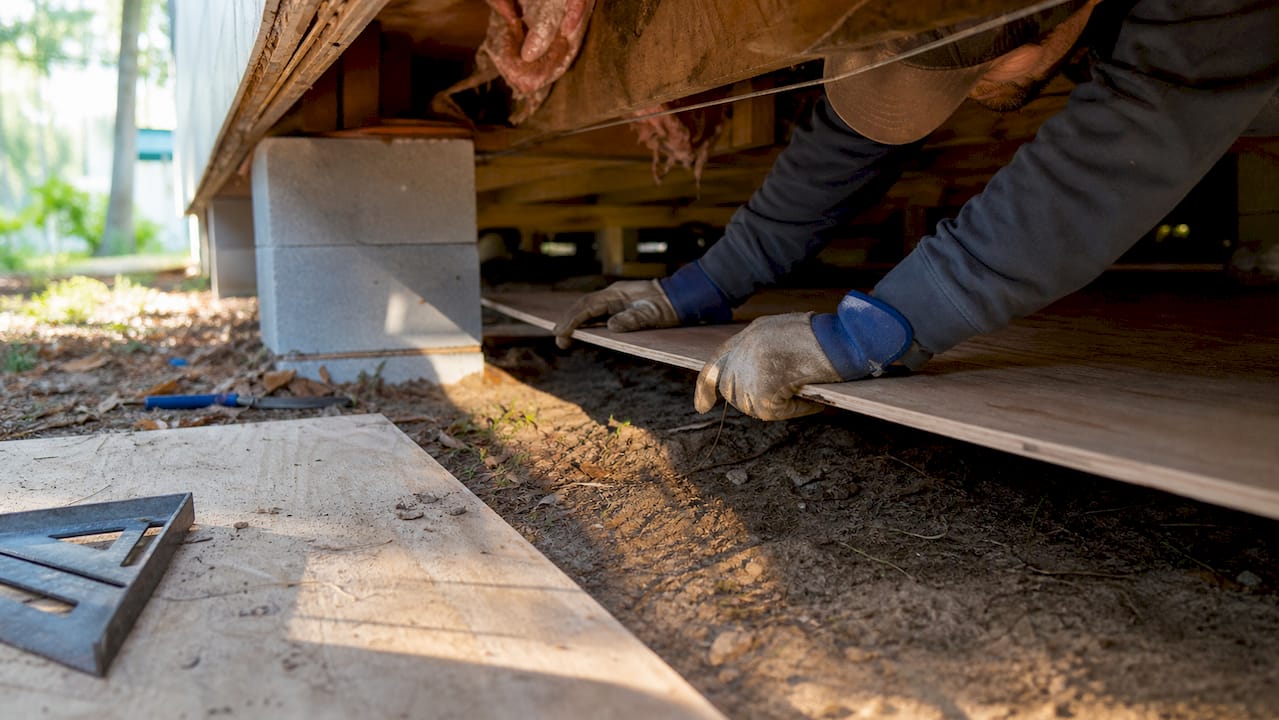
Mobile home subfloors made of particle board absorb moisture and develop soft spots over time. Replacing damaged subfloor with 3/4-inch CDX plywood is the right fix. CDX resists moisture better than OSB, and pairing it with Luxury Vinyl Plank flooring accommodates the structural flexing typical in manufactured homes. Buyers notice soft floors immediately, and a failed floor inspection can kill financing.
Vapor barriers under the home also matter. A torn or missing vapor barrier allows ground moisture to rise into the subfloor and walls. Replacing it costs relatively little and prevents the kind of damage that drops your sale price significantly.
High-ROI cosmetic updates
Targeted improvements of $1,500 to $5,000 typically yield a 3x return on investment for manufactured homes prepared for retail sale. That return comes primarily from neutral interior paint, new LVP flooring, and clean fixtures. Buyers respond to homes that feel move-in ready, even when the price reflects the home’s age.
Pro Tip: Take photos on a bright day with all interior lights on and windows clean. Poor photos are the single fastest way to lose online buyers before they ever contact you.
Pricing strategy matters as much as condition. Pricing approximately 5% below comparable local listings generates immediate interest and can produce multiple offers, which often drives the final price above what a higher asking price would have achieved. Check recent sales on MHVillage and local Facebook groups to set your baseline.
What are the most effective ways to market and sell a manufactured home?
The right platform depends on your timeline and how much work you want to do.
- MHVillage: The largest dedicated marketplace for manufactured homes in the United States. Listings reach buyers specifically searching for mobile homes, which improves lead quality compared to general real estate sites.
- Facebook Marketplace: Free to list and reaches a large local audience. Works well for homes priced under $50,000 where buyers are often paying cash or using personal loans.
- Craigslist: Still effective in many markets, particularly for lower-priced homes. Keep your listing description detailed and include clear photos to filter out low-quality inquiries.
- Yard signage: A simple “For Sale” sign with your phone number captures drive-by interest from people already familiar with the park or neighborhood.
- Real estate investors and wholesalers: Selling to a cash buyer skips the financing contingency entirely. You trade some price for speed and certainty.
Negotiating offers and financing options
Buyer financing for manufactured homes on leased land is more limited than for site-built homes. Chattel loans, which are personal property loans, are the most common option. FHA Title I loans also apply to manufactured homes without land. Understanding what your buyer can actually qualify for saves you from accepting an offer that falls apart at the financing stage.
Offering seller financing expands your buyer pool significantly. Buyers who cannot qualify for a chattel loan can still purchase if you carry the note. You set the interest rate, down payment, and repayment terms. This approach works especially well for homes priced under $40,000 where the monthly payment is manageable for both parties.
Pro Tip: Respond to every inquiry within two hours. Buyers shopping manufactured homes often contact multiple sellers at once. Slow responses cost you deals.
What should you know about selling in a mobile home park?
Selling a manufactured home inside a park adds a layer of process that many sellers underestimate. The park does not own your home, but it controls who can live there. That gives park management significant influence over your sale.
Sellers must review their lease agreement and understand the park’s buyer approval rules before accepting any offer. Most parks require buyers to pass background, credit, and income screening before they can take over the lot lease. A buyer who fails park approval cannot complete the purchase, even if the title transfer is otherwise ready to go.
Park approval is not a formality. It is a binding condition of the sale. Sellers who accept offers without first confirming the buyer’s eligibility with park management risk losing weeks of time and sometimes the sale entirely.
Key park-related factors to address before listing:
- Lot rent amount and transfer terms: Disclose the current monthly lot rent to every prospective buyer upfront. Surprises here kill deals.
- Transfer fees: Some parks charge a fee when the lot lease transfers to a new resident. Clarify who pays this fee in your sale agreement.
- Home relocation rules: Confirm whether the buyer can keep the home in place or whether the park requires it to be moved. Moving a manufactured home costs several thousand dollars and changes your buyer pool entirely.
- Park right of first refusal: Some lease agreements give the park the right to purchase the home before you sell to an outside buyer. Check your lease for this clause.
Coordinate with park management early. Introduce your buyer to the park office as soon as you have a serious offer. The trailer park selling process runs faster when park management is not surprised by a new application at the last minute.
Key Takeaways
Selling a manufactured home without land requires clear title, structural integrity, correct pricing, and park compliance to close successfully.
| Point | Details |
|---|---|
| Title governs the sale | Secure a lien-free certificate of title through your state DMV before listing. |
| HUD label affects financing | Verify or replace missing HUD certification plates before accepting offers. |
| Preparation drives ROI | Targeted repairs of $1,500–$5,000 typically return 3x in sale price improvement. |
| Pricing below market works | Listing 5% under comparable homes generates faster interest and can produce multiple offers. |
| Park approval is binding | Confirm buyer eligibility with park management before accepting any offer. |
What I’ve learned from selling manufactured homes without land
The sellers who struggle most are the ones who treat a manufactured home sale like a standard real estate transaction. It is not. The title process, the buyer financing options, and the park approval layer make this a distinct process that rewards preparation.
Clear title is non-negotiable. I have seen sales collapse at the finish line because a seller assumed a lien was resolved and it was not. Pull your title record before you list, not after you have a buyer waiting.
Small improvements move the needle more than sellers expect. A fresh coat of neutral paint and clean LVP flooring can shift a buyer’s perception from “project” to “move-in ready.” That perception change justifies a higher asking price and attracts buyers who can actually qualify for financing.
The biggest mistake I see is ignoring park approval until the last minute. Sellers get excited about an offer, sign a purchase agreement, and then discover the buyer cannot pass the park’s income screening. Weeks of time wasted. Confirm park eligibility before you get emotionally invested in any offer.
Transparency about the home’s condition and the park’s rules builds trust with buyers. Buyers who feel informed close. Buyers who feel surprised walk.
— Travis
Decostabuyshomes can help you sell your manufactured home
Selling a manufactured home on leased land involves more moving parts than most sellers expect. Decostabuyshomes specializes in manufactured home opportunities and works directly with sellers to create solutions that fit their situation, whether that means a fast cash offer or a more flexible arrangement.
If you want a clear path forward without the guesswork of listing, repairs, and park negotiations, Decostabuyshomes offers fair offers and a process built for exactly this type of sale. Read the full manufactured home selling guide to see how the process works from start to finish, or reach out directly to get an offer on your home.
FAQ
What documents do I need to sell a mobile home without land?
You need the certificate of title, a lien release from any lender, the HUD certification label, and a bill of sale. If the home is in a park, you also need the park’s lease transfer addendum.
Can I sell a mobile home without land if I still owe money on it?
Yes, but you must pay off the loan at or before closing so the lender can release the lien. The buyer cannot receive a clear title until the lien is fully satisfied.
How do I find buyers for a manufactured home without land?
List on MHVillage, Facebook Marketplace, and Craigslist, and place a yard sign if the home is in a visible location. Selling to a cash investor is the fastest option if your timeline is short.
Does the mobile home park have to approve my buyer?
Most parks require buyers to pass background, credit, and income screening before they can assume the lot lease. Park approval is a binding condition of the sale, not optional.
What is the fastest way to sell a mobile home without land?
Selling to a cash buyer or real estate investor is the fastest path. It eliminates financing contingencies and park approval delays, though you will typically accept a lower price in exchange for speed and certainty.