
Selling a house as is in Georgia means listing your property in its current condition without agreeing to make any repairs before closing. The term “as-is sale” is the recognized industry label for this approach, and it sets a clear expectation with buyers from day one. Georgia homeowners choose this path for many reasons: inherited properties, financial pressure, divorce, or simply a home that needs more work than the seller can manage. The strategy works, but only when you price correctly, disclose honestly, and understand who will actually buy your home.
What does selling a house as is in Georgia really mean?
An as-is sale does not mean you hide problems and walk away. Georgia law requires sellers to disclose known material defects even when the property is listed as-is. Buyers still have the right to inspect, and they will. What the as-is label actually does is set buyer expectations that you will not negotiate repairs after the inspection report comes back.
That distinction matters a great deal in practice. A buyer can still walk away after an inspection if they find something they cannot accept. They can also submit a lower offer based on what the inspection reveals. The as-is label limits your obligation to fix things, not the buyer’s right to know about them.
Homeowners sell as-is for practical reasons. An inherited property with deferred maintenance, a fixer-upper in a desirable Atlanta suburb, or a home with foundation issues all fit this category. The goal is to transfer the property without sinking money into repairs that may not return full value at closing.
How should you price an as-is property in Georgia?
Pricing is the single biggest factor in whether your as-is sale succeeds or stalls. The Georgia median home price sits at approximately $345,000–$369,687 in mid-2026, with Atlanta averaging $429,000–$435,000. Inventory is rising 5–10% year over year, which means buyers have more options and less urgency.
An as-is home must be priced below comparable move-in-ready properties in the same neighborhood. The gap depends on the scope of work needed. A home needing cosmetic updates might sell at a 5–10% discount. A property with structural or mechanical issues could require a 15–25% reduction to attract serious offers. Pricing too high leads to longer market time and fewer offers. That extended time on market signals distress to buyers and invites lower bids.
Here is what you can do to prepare without spending heavily:
- Clean the property thoroughly and remove clutter and personal items
- Mow the lawn, trim shrubs, and clear debris from the exterior
- Fix minor safety hazards like broken handrails or exposed wiring that could scare off lenders
- Take honest, well-lit photos that show the property accurately
- Write a listing description that acknowledges the condition without overselling
Pro Tip: Pull recent sold comps within a half-mile radius from the past 90 days. Focus on homes that needed work, not renovated properties. Your price should reflect what an investor or renovator can make a profit on after factoring in repair costs.
The Georgia market in 2026 rewards patience and realistic pricing. Homes are sitting on the market for 38–58 days on average. An overpriced as-is listing will sit even longer.
What are the legal requirements for selling as-is in Georgia?
Georgia does not require sellers to complete a standard disclosure form, but that does not mean you can stay silent about known problems. Georgia law imposes a duty to disclose any known material defects that would affect a buyer’s decision. Concealing a known issue exposes you to fraud claims after closing.
The legal requirements you must address include:
- Known material defects: Disclose structural problems, roof leaks, water intrusion, HVAC failures, or any issue you know about
- Lead-based paint: Federal law requires disclosure for homes built before 1978, regardless of state rules
- Closing attorney: Georgia is an attorney-closing state, meaning a licensed Georgia attorney must conduct the closing. Attorney fees typically run $700–$1,200.
- Title review: Your closing attorney reviews the title, prepares the deed, and manages the disbursement of funds
The closing attorney requirement is non-negotiable in Georgia. Even if you sell without a real estate agent, you must hire a licensed attorney to close the transaction. This protects both parties and gives you a professional reviewing the contract before you sign.
Selling a home in Georgia typically costs about 9.3% of the sale price when you factor in commissions, closing costs, and attorney fees. Selling as-is without an agent reduces that figure, but the attorney fee and other closing costs still apply.
Who buys as-is homes in Georgia?
The buyer pool for as-is properties is specific and predictable. Investors and cash buyers make up the majority of as-is purchases. They evaluate the property based on after-repair value minus renovation costs, and they move quickly when the numbers work.
Financing complicates as-is sales for traditional buyers. Conventional lenders require the home to meet minimum livability standards. A property with a failing roof, no functioning heat, or significant structural damage will not pass a standard appraisal. Buyers in those situations need renovation loans like the FHA 203(k) or Fannie Mae HomeStyle programs, which add complexity and time to the closing process.
Cash buyers remove that friction entirely. A cash offer closes in as few as 7–14 days with no appraisal contingency and no lender requirements. That speed has real value when you are managing an estate, facing foreclosure, or simply want to close and move on. Companies like Decostabuyshomes specialize in exactly this type of acquisition, offering multiple selling solutions rather than a single take-it-or-leave-it offer.
How to sell your house as-is in Georgia: step by step
Follow this sequence to move from decision to closing with the fewest surprises.
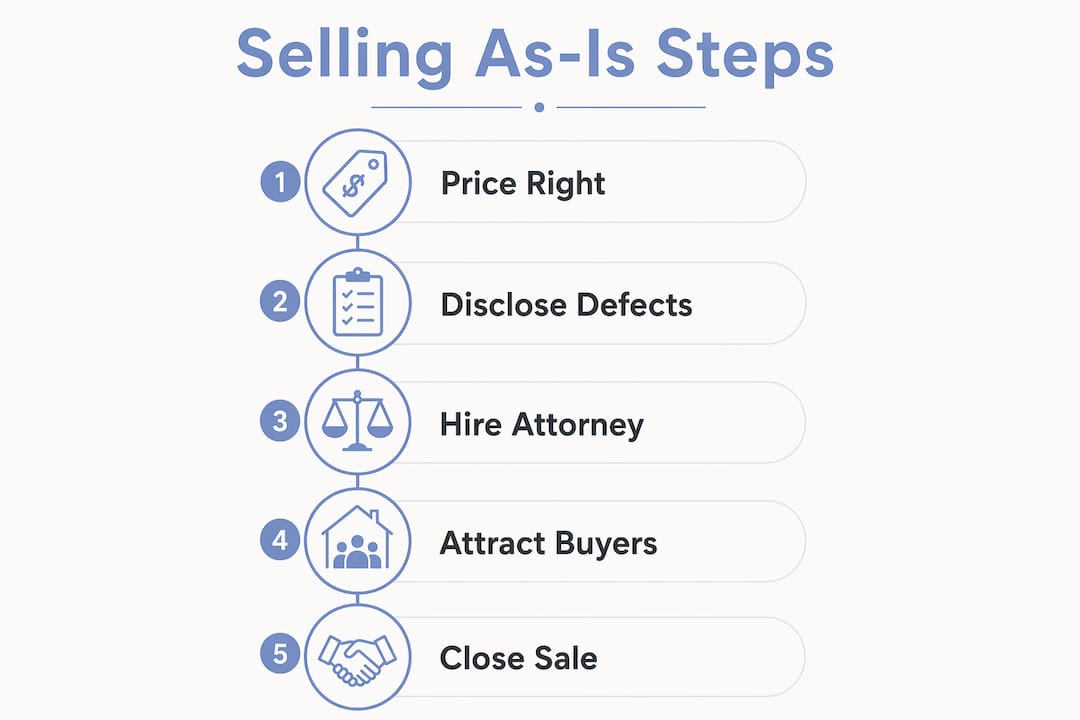
- Research local comps. Pull sold data from the past 90 days for similar properties in your zip code. Focus on condition-adjusted sales, not renovated homes.
- Prepare your disclosures. Write down every known defect in writing before you list. This protects you legally and builds buyer trust.
- Decide on agent commission. Since the NAR settlement, buyer-agent commissions are negotiable. Offering a competitive buyer-agent fee can attract more showings, especially in a slower market.
- List on the MLS. Georgia has two major MLS systems: FMLS for Atlanta and north Georgia, and Georgia MLS for most other areas. A flat-fee MLS listing costs around $95 and syndicates your property broadly without requiring a full-service agent.
- Hire a closing attorney. Contact a Georgia-licensed real estate attorney before you accept any offer. They will review the purchase agreement and protect your interests at closing.
- Evaluate offers carefully. Compare cash offers against financed offers by looking at net proceeds, closing timeline, and contingencies. A lower cash offer with no contingencies often beats a higher financed offer with inspection and appraisal conditions.
- Negotiate inspection findings. Even in an as-is sale, buyers may request a price reduction after inspection. You can accept, counter, or hold firm. Your disclosed condition sets the baseline for that conversation.
| Step | Key action | Why it matters |
|---|---|---|
| Pricing | Pull condition-adjusted comps | Attracts the right buyer pool faster |
| Disclosure | Document all known defects in writing | Reduces legal risk after closing |
| MLS listing | Use FMLS and Georgia MLS | Maximizes buyer exposure statewide |
| Closing attorney | Hire before accepting offers | Required by Georgia law; protects your interests |
| Offer review | Compare net proceeds, not just price | Cash offers often deliver more value despite lower price |
Pro Tip: Get a pre-listing inspection on your own dime if the property has significant issues. Knowing the full scope of problems lets you price accurately and prevents buyers from using the inspection report as a negotiating weapon.
My honest read on the Georgia as-is market right now
The 2026 Georgia market has shifted. 88% of homeowners hold mortgage rates below 6%, which means most people are not selling unless they have to. That creates a specific dynamic for as-is sellers: your competition is lower, but so is buyer urgency.
What I see consistently is sellers who price emotionally rather than analytically. They know what the house was worth in 2022, and they anchor to that number. The market does not care. An as-is property in 2026 competes against renovated listings with professional staging and fresh finishes. You win on price and transparency, not sentiment.
The sellers who close quickly are the ones who get a real attorney involved early, disclose everything upfront, and price the home at what an investor can actually make work. Trying to squeeze every dollar out of an as-is sale by pricing high and waiting rarely ends well. The longer a property sits, the more buyers wonder what is wrong with it beyond what you have already told them.
If you are selling an inherited property or a home you cannot afford to repair, the as-is path is genuinely the right one. Just go in with clear eyes about what the market will bear and what your legal obligations are. That combination closes deals.
— Travis
Selling an as-is home in Georgia? Decostabuyshomes can help
Decostabuyshomes works directly with Georgia homeowners who need to sell without making repairs. Whether you are dealing with an inherited property, a fixer-upper, or a home with deferred maintenance, the team evaluates your situation and presents multiple options, not just a single lowball offer.
If you are navigating a more complex situation, Decostabuyshomes also offers detailed resources on selling inherited property with multiple owners and guidance for selling a manufactured home in Georgia. For a direct evaluation of your property and a no-obligation offer, visit Decostabuyshomes and connect with the team today.
FAQ
What does as-is mean when selling a house in Georgia?
As-is means the seller will not make repairs before closing. Buyers can still inspect the property and negotiate based on findings, but the seller is not obligated to fix anything.
Does Georgia require a disclosure form for as-is sales?
Georgia does not mandate a standard disclosure form, but sellers must disclose all known material defects in writing. Concealing known issues creates legal liability after closing.
Do I need an attorney to sell my house as-is in Georgia?
Yes. Georgia law requires a licensed attorney to conduct all real estate closings. Attorney fees typically run $700–$1,200 and cover contract review, title work, and fund disbursement.
Who typically buys as-is homes in Georgia?
Cash buyers, real estate investors, and renovation-focused buyers make up the primary market for as-is properties. Traditional financing is often unavailable for homes with significant condition issues.
How much less should I price an as-is home in Georgia?
The discount depends on the scope of repairs needed. Cosmetic issues typically warrant a 5–10% reduction below comparable move-in-ready homes, while structural or mechanical problems may require a 15–25% reduction to attract offers.
Key takeaways
Selling a house as-is in Georgia requires accurate pricing, written disclosures of known defects, a licensed closing attorney, and a clear understanding of who your buyer will be.
| Point | Details |
|---|---|
| As-is still requires disclosure | Georgia law requires you to disclose all known material defects even without a standard form. |
| Price below move-in-ready comps | Condition-adjusted pricing attracts the right buyers and reduces time on market. |
| Attorney closing is mandatory | Georgia requires a licensed attorney at closing; budget $700–$1,200 for this fee. |
| Cash buyers close fastest | Investors and cash buyers skip appraisal and lender requirements, cutting weeks from the timeline. |
| MLS exposure matters | Listing on both FMLS and Georgia MLS via a flat-fee service maximizes your buyer reach statewide. |