
Selling a house as-is in Minnesota means listing your property in its current condition, with no repairs made before closing, while still meeting the state’s mandatory disclosure requirements. Minnesota law does not let sellers skip disclosure just because they label a sale “as-is.” Buyers typically expect a price reduction of 5% to 20% below market value to account for the work they will take on. That trade-off works well for homeowners facing financial pressure, urgent relocation, inherited properties, or homes with deferred maintenance that would cost more to fix than the repairs are worth.
What legal obligations must you fulfill when selling a house as-is in Minnesota?
Minnesota law requires full disclosure of all known material facts, even when a property is sold as-is. The Minnesota Seller’s Property Disclosure Statement covers structural defects, water damage, environmental hazards, and neighborhood issues that could affect the buyer’s decision. Sellers who skip this step face serious consequences.
Failure to disclose known material defects can result in contract rescission, liability for repair costs, and punitive damages. That exposure does not disappear because the listing says “as-is.” The phrase signals condition, not a waiver of legal duty.
Sellers often confuse “as-is” with “no disclosure,” but Minnesota law treats them as completely separate concepts. You can sell without making repairs. You cannot sell without revealing what you know.
Material facts include:
- Structural problems such as foundation cracks, roof damage, or failing load-bearing walls
- Environmental hazards including lead paint, asbestos, mold, or underground storage tanks
- Water intrusion history, including basement flooding or plumbing failures
- Neighborhood issues like flight paths, nearby industrial operations, or zoning disputes
- Mechanical system failures in HVAC, electrical, or plumbing
Real estate attorneys are not required in Minnesota transactions, but they are strongly recommended for as-is sales. An attorney helps prepare disclosures correctly, structure the purchase agreement to limit post-sale liability, and review any buyer claims that arise after closing. The cost of an attorney is far lower than defending a rescission lawsuit.
Non-owner sellers, such as estate executors or trustees, may use a third-party inspection report as a disclosure alternative under Minnesota law. That report must be provided to buyers before they make an offer.
How to price and market your as-is home to attract the right buyers in Minnesota
Pricing is the single most important decision in an as-is sale. Set the price too high and buyers walk away or come back with aggressive post-inspection demands. Set it too low and you leave money on the table unnecessarily.
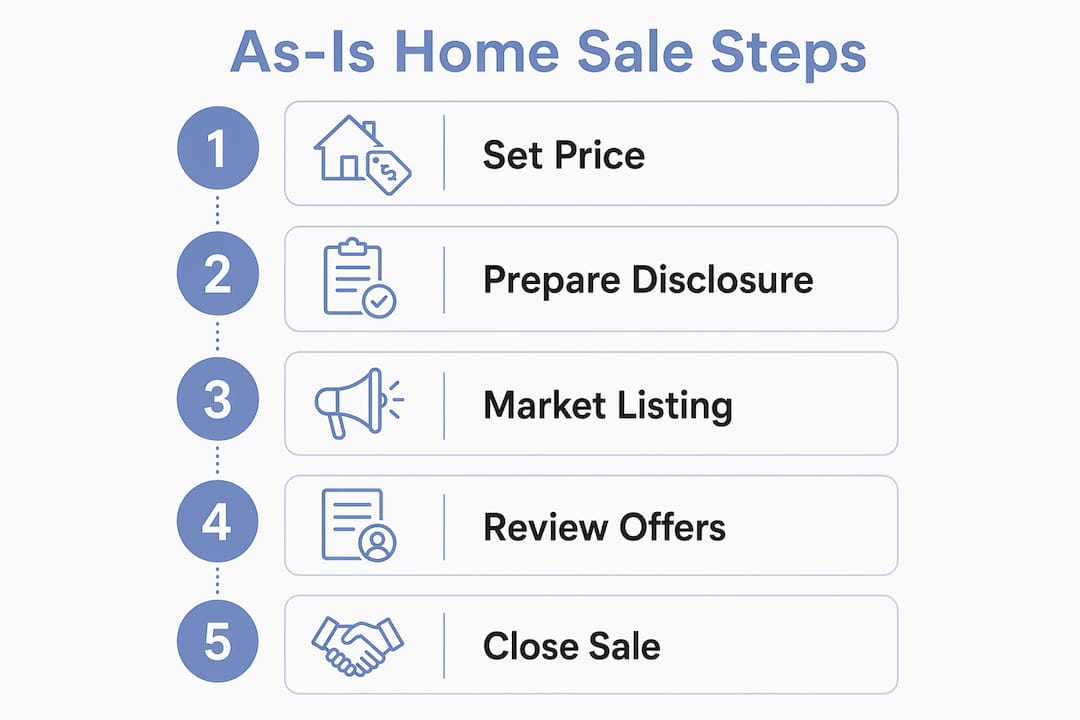
The median sale price in Minneapolis hit $335,000 in january 2026. As-is properties in the same market typically sell for 5% to 20% below that benchmark, depending on condition and location. A home needing cosmetic updates sits closer to the 5% discount. A home with structural or mechanical problems lands near the 20% end. Pricing high but fair within that range reduces time on market and limits aggressive buyer renegotiations after inspection.
Effective marketing for as-is homes uses specific language that sets accurate expectations:
- “Priced to sell” signals that the discount is already built in
- “Fixer-upper” attracts investors and buyers who want to customize
- “Investor special” or “value-add opportunity” speaks directly to cash buyers
- Listing photos should show the full property honestly, not hide problem areas
Proper marketing can attract motivated investors and buyers who expect project properties, especially in the Twin Cities market. Investor networks, real estate investment groups, and direct outreach to cash buyers all shorten the time between listing and offer.
Pro Tip: Clean the property thoroughly and remove clutter before photos. Staging costs nothing but time, and a clean space photographs better, which draws more buyers even when the bones of the house need work.

Simple, low-cost steps that help without triggering repair obligations include deep cleaning, removing personal items, mowing the lawn, and fixing any safety hazards that could prevent a buyer from entering the home safely.
What are your options for selling a house as-is in Minnesota?
Three main paths exist for selling a Minnesota home as-is. Each has a different timeline, cost structure, and level of effort.
Listing with a real estate agent
An agent who specializes in as-is or distressed properties knows how to price correctly and reach the right buyers. Average days on market in Minneapolis run about 59 days for traditional sales. That timeline includes showings, negotiations, buyer financing contingencies, and inspection periods. The upside is that listed properties often attract higher offers than direct investor sales.
When choosing an agent for an as-is listing, look for someone with experience in fix-and-flip transactions or distressed property sales. Ask how many as-is homes they have sold in the past 12 months and what their average sale-to-list price ratio looks like.
For Sale By Owner (FSBO)
FSBO removes the agent commission but adds significant work. You handle pricing research, marketing, showings, disclosure preparation, offer review, and closing coordination. Minnesota’s disclosure requirements still apply in full. FSBO works best when you already have a buyer lined up or have real estate experience yourself. Without that, the time cost and legal exposure often outweigh the commission savings.
Selling directly to cash buyers or investors
Cash buyers close in as few as 7 to 10 days, compared to the 59-day average for traditional sales. Some buyers provide no-obligation offers within 24 hours of a property inquiry. That speed matters when you face foreclosure, a job relocation deadline, or an estate that needs to settle quickly.
Investors typically offer around 70% of after-repair value but cover closing costs and require no repairs. That offer structure is firm. Investors price in their renovation budget and profit margin, so the room for negotiation is limited. The trade-off is certainty: no financing contingencies, no inspection credits, and a closing date you control.
Pro Tip: Get at least two or three cash offers before accepting one. Offer amounts vary significantly between buyers, and a 10% difference on a $300,000 property is $30,000.
The right method depends on your timeline. Sellers with fewer than 30 days should choose a cash buyer or as-is listing with minimal prep. Sellers with 60 or more days may benefit from selective repairs that increase buyer confidence and final price. You can also review as-is sale approaches in other states to understand how disclosure and negotiation dynamics compare.
Step-by-step process to sell your Minnesota home as-is
A clear process prevents the two most common mistakes in as-is sales: incomplete disclosures and mispriced listings.
-
Gather all property information. Pull permits, utility records, HOA documents, and any prior inspection reports. Buyers and their agents will ask for these, and having them ready speeds up due diligence.
-
Complete the Minnesota Seller’s Property Disclosure Statement. Answer every question honestly based on your actual knowledge. If you are an estate executor or non-owner seller, commission a third-party inspection report to substitute for personal knowledge of the property’s condition.
-
Order a pre-listing inspection (optional but recommended). A pre-listing inspection helps you set an accurate price and removes surprises during buyer negotiations. You are not required to fix anything the inspection finds, but you must disclose it.
-
Set your price based on condition and comparable sales. Use recent sales of similar properties in the same neighborhood, adjusted for the condition discount. A local agent or appraiser can help you land in the right range.
-
List the property with clear as-is language. Include condition disclosures in the listing description. Buyers who submit offers after reading the disclosure have less grounds for renegotiation later.
-
Evaluate offers carefully. Compare not just price but financing type, contingencies, and closing timeline. A cash offer at 92% of list price with a 10-day close often beats a financed offer at 100% of list with a 60-day close and inspection contingency.
-
Respond to buyer inspection requests strategically. Sellers can refuse repair requests, offer credits, or adjust price in response to inspection findings. Your leverage depends on how accurately you priced the home and how motivated the buyer is.
-
Coordinate closing with your title company or attorney. Minnesota closings typically use a title company. Confirm the closing date, review the settlement statement carefully, and verify that all disclosure documents are part of the final file.
Key takeaways
Selling a house as-is in Minnesota requires accurate pricing, full legal disclosure, and the right buyer match to close quickly and avoid post-sale liability.
| Point | Details |
|---|---|
| Disclosure is mandatory | Minnesota law requires full disclosure of known material facts regardless of as-is status. |
| Price reflects condition | As-is homes typically sell for 5%–20% below market value depending on condition and location. |
| Cash buyers close fastest | Investors and cash buyers can close in 7–10 days versus the 59-day Minneapolis average. |
| Method matches timeline | Sellers with under 30 days should target cash buyers; longer timelines may allow agent-listed sales. |
| Pre-listing inspection helps | A third-party inspection report sets accurate pricing and limits buyer renegotiation leverage. |
What I’ve learned from watching sellers get this wrong
Most sellers who struggle with as-is transactions make one of two mistakes. They either price the home as if it were move-in ready and then lose buyers at inspection, or they underprice out of anxiety and hand money to the first investor who calls.
The disclosure mistake is the one that costs the most. I have seen sellers assume that writing “as-is” in the purchase agreement protects them from any future claim. It does not. Minnesota courts have consistently held that known defects must be disclosed regardless of how the sale is labeled. Skipping that step to save time creates liability that can follow you for years after closing.
Urgency is real, and I respect it. But urgency does not mean you have to accept the first offer that arrives. Getting two or three cash offers takes less than a week in most cases and can add tens of thousands of dollars to your net proceeds. The sellers who do best are the ones who move fast but not recklessly.
The as-is process works best when you treat it like a business transaction. Know your floor price before you list. Have your disclosures ready before you accept an offer. Understand what a buyer’s financing type means for your closing timeline. Those three things alone separate sellers who close smoothly from those who end up back at the negotiating table three weeks in.
For sellers dealing with manufactured or mobile homes, the same principles apply, though the process has some differences. The guide to selling a manufactured home covers those specifics in detail.
— Travis
How Decostabuyshomes helps Minnesota sellers close with confidence
Minnesota homeowners who need to sell without repairs and without delays have a direct option through Decostabuyshomes. The company buys properties as-is across the United States, with no repair requirements and no agent commissions taken from your proceeds.
Decostabuyshomes provides cash offers with flexible closing dates, so you set the timeline that fits your situation. Whether you are facing a financial deadline, relocating for work, or managing an inherited property, the process is straightforward: submit your property details, receive a no-obligation cash offer, and choose your closing date. There are no hidden fees and no pressure. If you want to understand your options before committing to any path, a free consultation is the right first step.
FAQ
What does selling as-is mean in Minnesota?
Selling as-is means the seller makes no repairs before closing but must still disclose all known material defects under Minnesota law. The buyer accepts the property in its current condition.
Do I have to disclose defects when selling as-is in Minnesota?
Yes. Minnesota requires sellers to complete a Seller’s Property Disclosure Statement covering structural, environmental, and mechanical issues. Failure to disclose known defects can result in rescission and damages.
How much less will I get for an as-is home in Minnesota?
As-is properties in Minneapolis typically sell for 5%–20% below market value, depending on the extent of needed repairs and the property’s location.
How fast can I close when selling as-is to a cash buyer?
Cash buyers and investors can close in as few as 7–10 days. That compares to an average of 59 days for traditional agent-listed sales in Minneapolis.
Should I get a pre-listing inspection before selling as-is?
A pre-listing inspection is not required but is strongly recommended. It helps you set an accurate price and reduces the chance of buyers using inspection findings to renegotiate after you accept an offer.