
Selling a house as is in Virginia means listing your property in its current condition, with no repairs, renovations, or upgrades before closing. Virginia operates under a buyer-beware framework, which gives sellers flexibility, but you still carry mandatory disclosure obligations that can expose you to lawsuits if ignored. The gap between a fast, clean sale and a legal headache comes down to three things: understanding your disclosure duties, pricing your home accurately for its condition, and choosing the right sales channel. This guide covers all three so you can close with confidence.
What legal disclosures do you need when selling a house as is in Virginia?
Virginia’s buyer-beware doctrine does not mean you can hide known problems. Sellers must disclose known defects honestly and completely, even when selling as-is. The doctrine simply means buyers accept the property’s condition after their own due diligence. It does not protect sellers who actively conceal or misrepresent defects.
The Virginia Residential Property Disclosure Statement is required for all residential transactions. This form is standard in every as-is sale and must be completed accurately before closing. Skipping it or leaving it incomplete creates legal exposure.
Key disclosure obligations include:
- Known material defects: Structural issues, roof leaks, HVAC failures, plumbing problems, and foundation cracks must be disclosed if you know about them.
- Lead-based paint: Federal law requires a separate lead-based paint disclosure for any home built before 1978. This applies regardless of state law.
- HOA rules and pending assessments: If your property sits in a homeowners association, you must disclose governing documents and any known pending fees.
- Septic and well systems: Non-public water or sewer systems require specific disclosures about their condition and last service date.
Failing to disclose known defects can lead to post-closing fraud lawsuits or contract rescission, even in as-is sales. Virginia courts have consistently held sellers accountable for deliberate concealment. You are not required to volunteer every minor cosmetic flaw, but honesty when asked is non-negotiable.
Pro Tip: Get a real estate attorney to review your disclosure forms before signing. A one-hour consultation costs far less than defending a post-closing lawsuit.
How to price your as-is Virginia home to attract buyers
Pricing an as-is property requires a different approach than pricing a move-in-ready home. As-is homes in Virginia typically sell for 10% to 40% less than comparable updated properties, depending on condition and location. That range is wide, and where your home falls within it depends on the severity of deferred maintenance, local demand, and how you choose to sell.
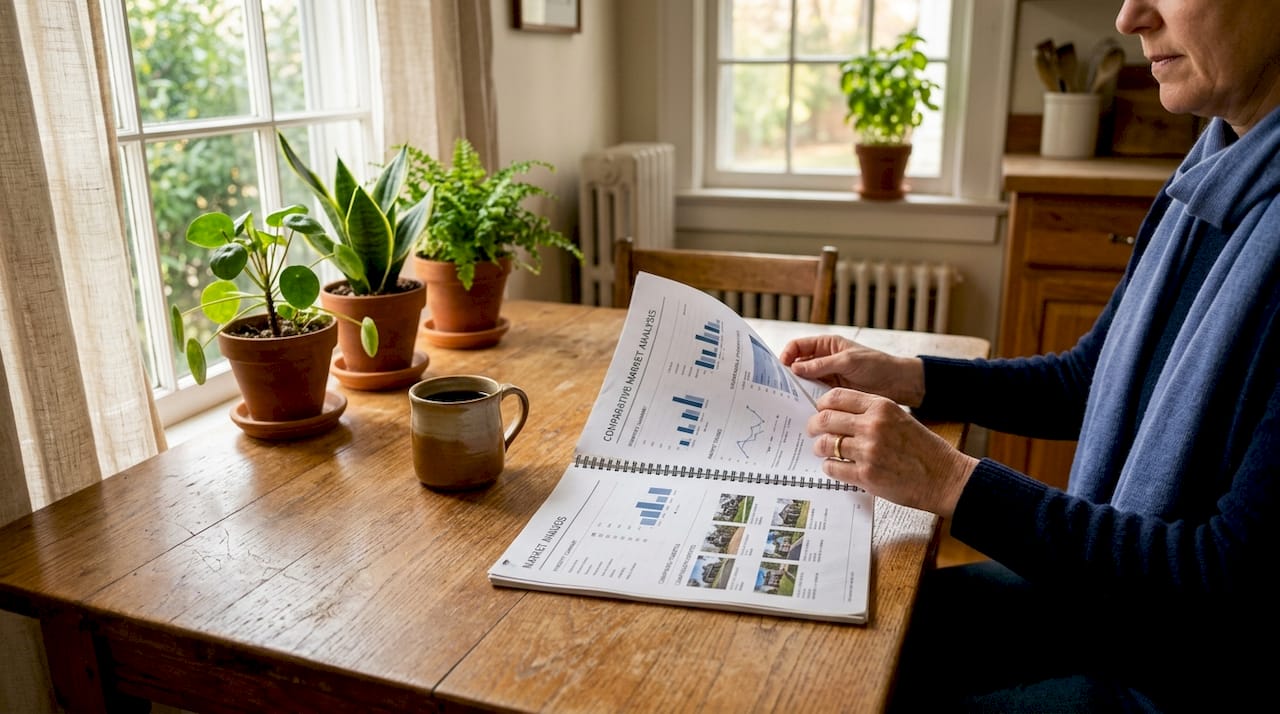
The most reliable starting point is a comparative market analysis using recent sales of similar homes in your neighborhood. From that baseline, subtract estimated repair costs with a multiplier. Most investors apply a factor of 1.2 to 1.5 on top of raw repair costs to account for their time, risk, and profit margin. That adjusted figure represents the discount a cash buyer will expect.
A pre-listing home inspection costs around $400–$600 in Northern Virginia and gives you a documented list of defects before buyers conduct their own inspection. That knowledge lets you price with precision rather than guessing. It also reduces the chance of a buyer renegotiating after their inspector finds something you did not account for.
Not every improvement is off the table. Minor cosmetic work like fresh paint and landscaping can yield a 2–4x return on investment even in an as-is sale. Spending $500 on curb appeal to recover $1,500 in sale price is not a renovation. It is a pricing decision.
Pro Tip: Always calculate your net proceeds, not just the offer price. Subtract transfer taxes, commissions, and closing fees before comparing offers from different buyers.
For context on how similar strategies apply in neighboring states, the Maryland as-is selling guide from Decostabuyshomes covers comparable pricing frameworks worth reviewing.
What are the common methods for selling a house as is in Virginia?
Virginia homeowners have four realistic options for selling as-is. Each carries different price expectations, timelines, and cost structures.
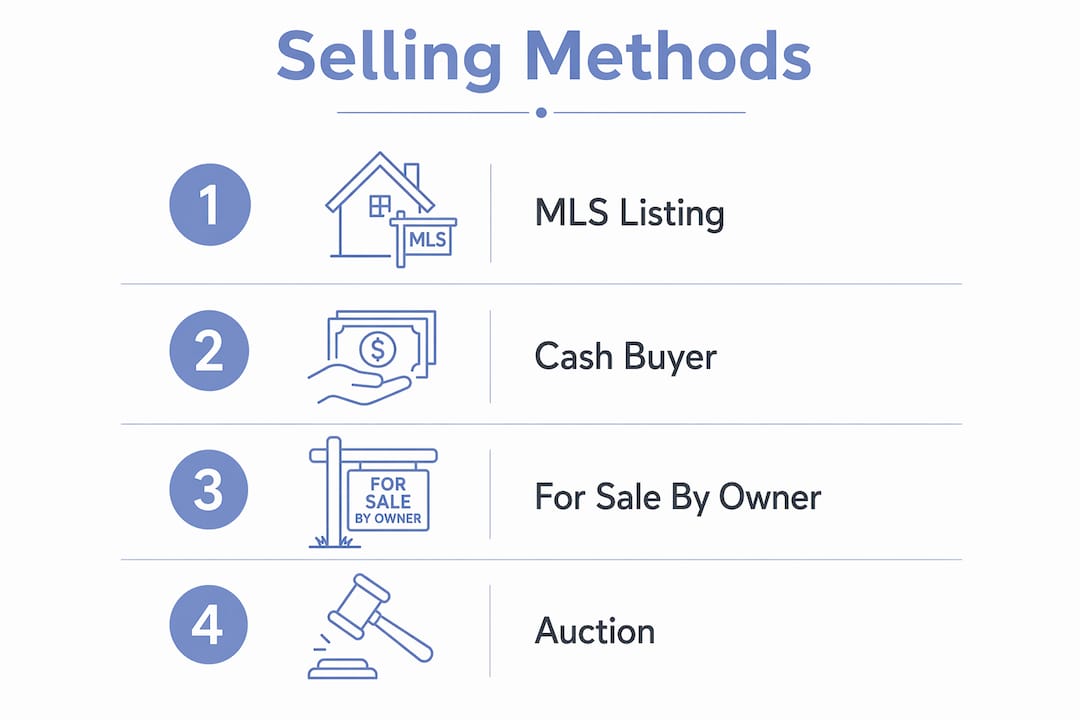
Listing on the MLS with an agent
An MLS listing reaches the widest pool of buyers, including retail buyers who may accept some condition issues if the price is right. MLS as-is listings typically achieve 80%–90% of market value, which is the highest price range available for distressed properties. The trade-off is time. You will likely wait 30–90 days for a qualified buyer, and you will pay listing agent commissions, which are the largest single cost in seller closing expenses and fully negotiable.
Selling to a cash buyer or investor
Cash buyers close fast, often in 7–21 days, and skip the financing contingency that kills many retail deals. The price reflects that speed and certainty. Cash offers typically range from 50%–70% of market value, which is a meaningful discount but eliminates agent commissions, repair negotiations, and extended holding costs. For homeowners facing foreclosure, probate, or relocation deadlines, the net difference often narrows considerably.
For sale by owner (FSBO)
FSBO removes the listing agent commission but places the full burden of marketing, negotiation, and paperwork on you. Buyers’ agents still typically expect compensation, so savings are partial. FSBO works best when you already have a buyer lined up or when the property has strong demand.
Auction
Auctions create urgency and competitive bidding but carry unpredictable results. Reserve prices protect you from selling below a floor, but auction fees and marketing costs reduce your net. This method suits unique or hard-to-value properties more than standard single-family homes.
The right method depends on your timeline and price expectations:
- Need to close in under 30 days: Cash buyer or investor is the most direct path.
- Can wait 60–90 days and want maximum price: MLS listing with a flat-fee or full-service agent.
- Have a buyer already: FSBO with a real estate attorney handling the paperwork.
- Unusual property with uncertain value: Auction with a defined reserve price.
What is the typical closing process when selling as is in Virginia?
Virginia uses a settlement agent model for closings. A licensed settlement agent, often supervised by an attorney, coordinates the transaction, prepares documents, and disburses funds. Virginia closings typically take 30–45 days from contract ratification to settlement, though cash transactions can close faster.
The closing process follows these steps:
- Contract ratification: Both parties sign the purchase agreement, triggering the inspection and financing contingency periods.
- Title search: The settlement agent confirms clear title and identifies any liens, judgments, or encumbrances.
- Disclosure delivery: All required forms, including the Virginia Residential Property Disclosure Statement, must be delivered to the buyer.
- Final walkthrough: The buyer confirms property condition matches the contract terms.
- Settlement: Both parties sign closing documents, funds are disbursed, and the deed is recorded.
Seller closing costs in Virginia, excluding agent commissions, typically run 1%–3% of the sale price. The main components are the grantor’s tax, deed preparation, HOA transfer fees, and prorated property taxes. Virginia’s grantor’s tax is $0.25 per $100 of sale price statewide. Sellers in Northern Virginia pay an additional $0.15 per $100, bringing the total to $0.40 per $100 in that region.
Northern Virginia closings also involve higher attorney participation and regional contract forms specific to the DC corridor market. If you are selling in Fairfax, Arlington, or Loudoun County, expect additional documentation requirements compared to rural Virginia transactions.
How to avoid common mistakes when selling as is in Virginia
The most expensive mistake sellers make is confusing “as-is” with “no obligations.” As-is defines the repair terms of the sale. It does not limit your legal duties as a seller.
Virginia law requires you to maintain the property from contract ratification through closing. If the roof leaks worse after you sign the contract, or if vandalism damages the property and you ignore it, the buyer can void the contract or pursue legal claims. Maintain utilities, secure the property, and address any active damage during the contract period.
Disclosure errors cause more post-closing disputes than any other issue in as-is sales. Complete every required form accurately. If you are unsure whether something qualifies as a material defect, disclose it. The cost of over-disclosing is zero. The cost of under-disclosing can include litigation, settlement payments, and contract rescission.
Pro Tip: When comparing offers, build a simple net proceeds spreadsheet. List the offer price, subtract transfer taxes, commissions, and any seller concessions. The highest headline offer is rarely the best net outcome.
Negotiating on net proceeds rather than gross price keeps your focus on what you actually walk away with. A cash offer at 65% of value with no commissions and a 14-day close can outperform an MLS offer at 85% of value after commissions, concessions, and 60 days of carrying costs.
Key takeaways
Selling a house as is in Virginia requires accurate pricing, complete disclosures, and a clear-eyed comparison of net proceeds across all available sale methods.
| Point | Details |
|---|---|
| Disclosure is mandatory | Complete the Virginia Residential Property Disclosure Statement honestly to avoid post-closing lawsuits. |
| Price reflects condition | As-is homes sell for 10%–40% below comparable updated properties; price from comps, not emotion. |
| Cash vs. MLS trade-off | Cash buyers offer 50%–70% of value with speed; MLS listings reach 80%–90% but take longer. |
| Closing costs add up | Seller costs run 1%–3% plus commissions; Northern Virginia sellers pay a higher grantor’s tax rate. |
| Net proceeds decide the winner | Always subtract all costs before comparing offers. The highest offer price is not always the best deal. |
What I’ve learned from watching sellers get this wrong
Virginia’s as-is market rewards sellers who do their homework and punishes those who treat “as-is” as a shortcut. I’ve seen homeowners price their properties based on what they need from the sale rather than what the market will pay. That approach produces extended days on market, price reductions, and ultimately a worse outcome than a realistic price from day one would have delivered.
The disclosure piece trips up more sellers than any other part of the process. There is a persistent belief that selling as-is means you do not have to say anything about the property’s condition. That belief is wrong and expensive. Virginia courts have sided with buyers in concealment cases even when the contract clearly stated “as-is.” The legal protection of an as-is clause covers repair obligations, not honesty obligations.
Pre-listing inspections are underused by Virginia sellers. Spending $400–$600 to know exactly what a buyer’s inspector will find is one of the highest-return decisions you can make before listing. It lets you price with confidence, prepare accurate disclosures, and avoid the renegotiation that kills deals after inspection. Sellers who skip this step often end up renegotiating anyway, but from a weaker position.
My honest recommendation: match your sale method to your actual priorities. If time matters more than price, go direct to a cash buyer. If price matters more than time, list on the MLS with full disclosure and a realistic as-is price. Trying to get cash-buyer speed and MLS-level pricing at the same time is not a realistic expectation in the Virginia market.
— Travis
How Decostabuyshomes helps Virginia homeowners sell as-is
Virginia homeowners who want a straightforward path to closing have options beyond the traditional listing process. Decostabuyshomes works directly with sellers across the United States, offering multiple selling solutions tailored to the property’s condition and the seller’s timeline.
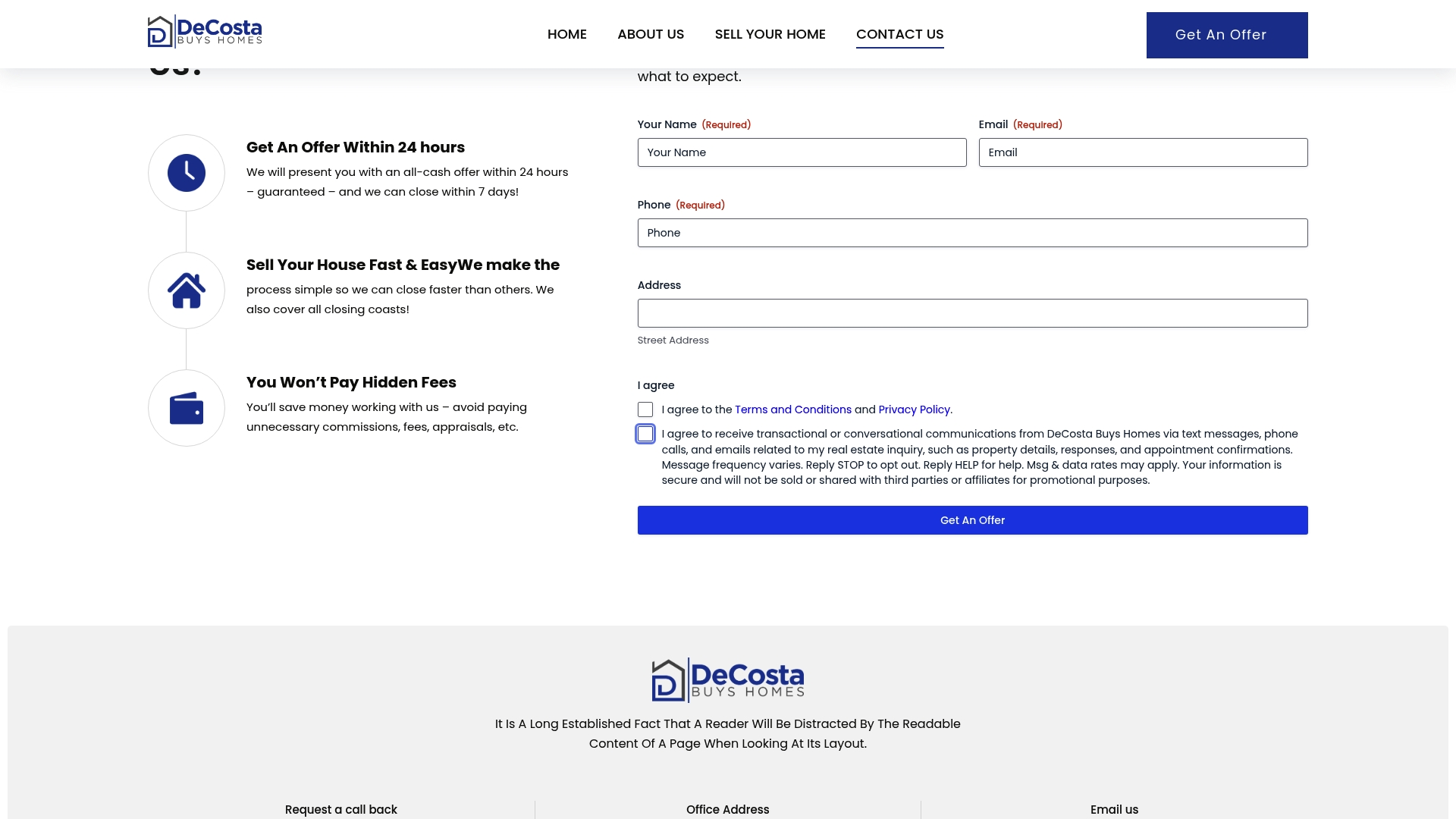
Whether you need a fast cash offer or want to explore a novation agreement that targets retail buyers without requiring you to make repairs, Decostabuyshomes structures deals around what works for you. The team handles pricing analysis, disclosure guidance, and closing coordination so you are not navigating the process alone. Visit Decostabuyshomes to request an offer or learn more about your options. Homeowners selling manufactured homes or mobile homes can also find specialized guidance through the manufactured home selling guide.
FAQ
What does selling as is mean in Virginia?
Selling as-is means the buyer accepts the property in its current condition, and the seller makes no repairs before closing. Virginia sellers still must complete required disclosures and cannot conceal known material defects.
Do I have to disclose defects when selling as is in Virginia?
Yes. Virginia law requires sellers to complete the Virginia Residential Property Disclosure Statement and disclose all known material defects. Concealing defects can result in post-closing lawsuits even in as-is transactions.
How much less will I get for selling my house as is in Virginia?
As-is homes in Virginia typically sell for 10%–40% below comparable move-in-ready properties, depending on condition, location, and the sale method used.
How fast can I close on an as-is home sale in Virginia?
Cash buyers can close in as few as 7–21 days. Traditional MLS transactions with financing typically take 30–45 days from contract ratification to settlement.
What closing costs do Virginia sellers pay on an as-is sale?
Seller closing costs in Virginia, excluding agent commissions, run approximately 1%–3% of the sale price. This includes the grantor’s tax of $0.25 per $100 statewide, with Northern Virginia sellers paying $0.40 per $100 total.