
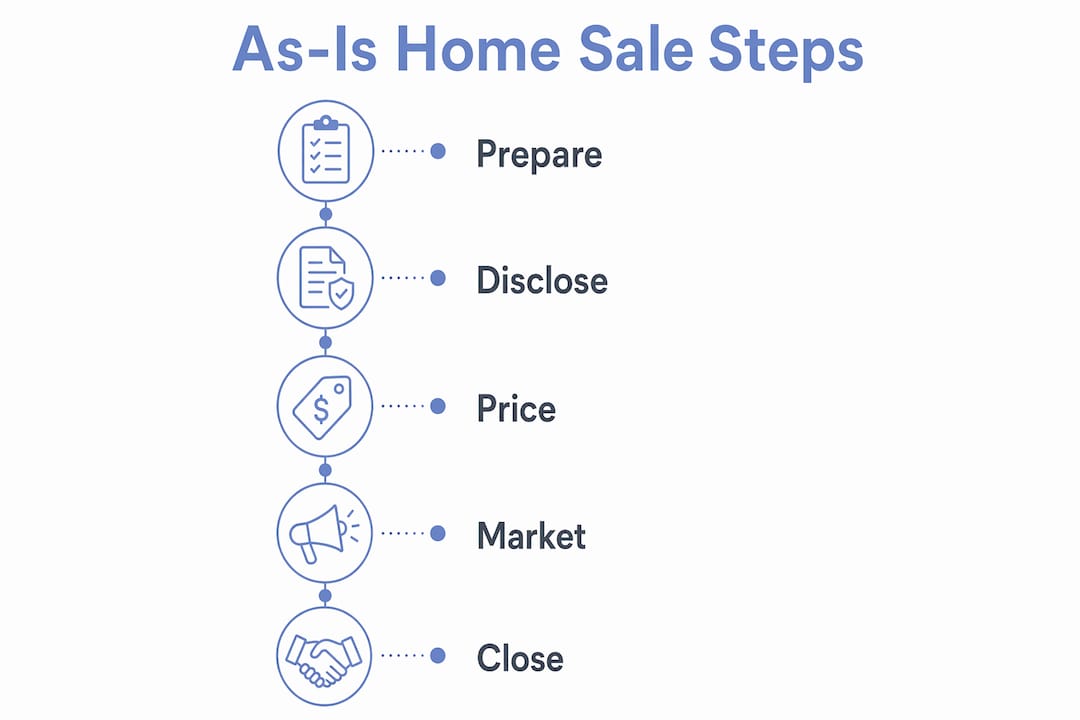
Selling a house as is means listing and transferring a property in its current condition, with no repairs or renovations completed before closing. The buyer accepts the home exactly as it stands. This approach saves sellers time and upfront costs, but it typically results in a lower sale price than a fully renovated listing. Real estate professionals use the term “as-is sale” or “as-is conveyance” to describe this transaction type. This guide covers the financial trade-offs, legal obligations, pricing methods, and best practices you need to make a confident decision in 2026.
What are the pros and cons of selling a house as is?
An as-is sale removes the burden of pre-sale repairs, which can run anywhere from $5,000 to $30,000 or more on a traditional listing. That savings is real, but it comes with a trade-off.
The advantages of selling as is:
- No repair costs or contractor scheduling before listing
- Faster time to market, since you skip the renovation phase
- Fewer post-inspection renegotiations over repair credits
- Simpler process for sellers dealing with inherited properties, financial hardship, or relocation
The disadvantages:
- Homes sold as is typically fetch 10–25% less than comparable renovated properties
- A smaller buyer pool, since many traditional buyers want move-in-ready homes
- Some buyers using conventional financing may face lender restrictions if the home has structural or safety issues
Pro Tip: Price the discount into your list price from day one. Buyers will factor repair costs into every offer anyway, so starting too high just delays the inevitable and costs you time.
Market conditions matter here. In a seller’s market with low inventory, as-is homes attract more competition and tighter discounts. In a buyer’s market, the gap between as-is and renovated prices widens. Attracting both investor and owner-occupant buyers narrows the discount required and pushes sale prices closer to market value.

How does the inspection and disclosure process work?
Buyers retain the right to perform a home inspection even when purchasing an as-is property. The inspection does not disappear because of the as-is designation. What changes is its purpose.
An as-is clause shifts the inspection from a repair negotiation tool to a condition verification tool. Buyers use the results to decide whether to proceed, not to demand fixes. That said, a buyer can still walk away if the inspection reveals problems that exceed their budget or risk tolerance. The inspection contingency remains in effect unless the buyer explicitly waives it in writing.
What sellers must disclose:
- Known structural defects (foundation cracks, roof damage, framing issues)
- Water intrusion, mold, or flooding history
- Electrical, plumbing, or HVAC problems the seller is aware of
- Pest infestations or prior treatments
- Any material fact that could affect the property’s value or desirability
Most states require sellers to complete detailed disclosure forms regardless of as-is status. States including California, Texas, Florida, New York, and Illinois all mandate full written disclosure of known defects. Failing to disclose can lead to post-sale lawsuits that cost far more than the repairs would have.
Pro Tip: Be specific in your disclosures. “Roof has a known leak above the master bedroom, approximately 3 square feet of damaged decking” protects you far better than “roof issues.” Vague disclosures invite disputes.
If you are selling in a specific state, Decostabuyshomes publishes detailed state guides, including one for selling as is in Maryland, that cover local disclosure requirements in depth.
How to price a house when selling it as is
Accurate pricing is the single most important factor in an as-is sale. Overprice the home and it sits. Underprice it and you leave money on the table.
Start with a Comparative Market Analysis (CMA) that pulls both renovated and as-is comparable sales in your area. The gap between those two sets of comps gives you a realistic discount range to work with. From there, get written repair estimates from licensed contractors. Subtract those costs from the renovated comparable value, then apply an additional margin for buyer risk and profit expectations.
| Scenario | Estimated Market Value (Renovated) | Repair Cost Estimate | Realistic As-Is Price |
|---|---|---|---|
| Cosmetic issues only | $300,000 | $15,000 | $270,000–$280,000 |
| Moderate structural repairs | $300,000 | $50,000 | $220,000–$240,000 |
| Major systems replacement | $300,000 | $90,000 | $175,000–$200,000 |
The discount deepens as repair severity increases. Cosmetic problems like dated finishes or worn carpet carry a smaller penalty than foundation or roof issues. Investors use the after-repair value (ARV) formula to calculate their maximum offer, so providing repair estimates upfront speeds their decision-making and attracts more serious bids.
Local market conditions also shape your price ceiling. In high-demand urban markets, investors compete aggressively and as-is discounts shrink. In slower rural markets, the buyer pool is thinner and discounts run deeper. Know your local inventory levels before you set a number.
Who buys as-is homes and how do you reach them?
The primary buyers for as-is properties fall into two groups: real estate investors and renovation-ready owner-occupants.
Investors, including fix-and-flip buyers, BRRRR investors, and wholesale buyers, make up the largest share of as-is purchases. They evaluate deals based on ARV minus repair costs minus their profit margin. Speed matters to them. They close fast, often with cash, and they skip the emotional attachment that slows traditional buyers. Companies like Decostabuyshomes specialize in exactly this type of acquisition, offering sellers multiple options beyond a single take-it-or-leave-it cash offer.
Owner-occupants who want a project home also enter the as-is market, particularly if the property qualifies for renovation financing programs. FHA 203(k) loans and Fannie Mae HomeStyle loans let buyers finance both the purchase and repairs in one mortgage. These buyers expand your pool and can push your sale price higher.
How to market an as-is property effectively:
- Use MLS keywords like “investor special” or “handyman special” to signal condition clearly
- Include a written repair cost estimate in the listing package
- Photograph every known issue honestly. Transparency builds trust faster than polished staging
- Reach out directly to local real estate investment groups and wholesalers
- List on investor-focused platforms alongside the MLS
Pro Tip: Small, inexpensive improvements under $500, like mowing the lawn, cleaning gutters, or replacing burned-out light bulbs, boost buyer perception without creating any repair obligation. A clean, accessible property photographs better and shows better.
What are best practices for a smooth as-is home sale?
A well-prepared as-is sale closes faster and with fewer surprises than one handled reactively.
- Get a pre-listing inspection. Hire a licensed inspector before you list. Knowing every defect in advance lets you price accurately, disclose completely, and avoid deal-killing surprises during the buyer’s inspection.
- Complete your disclosure forms thoroughly. Use specific language. Name the defect, its location, and its approximate severity. Vague answers create legal exposure.
- Price from data, not emotion. Use contractor estimates and CMA data to set your number. Emotional attachment to a property’s history does not translate into buyer offers.
- Negotiate with evidence. When buyers submit low offers citing repair costs, counter with your own written estimates. Data wins negotiations.
- Work with an experienced agent. Experienced agents add measurable value by pricing accurately, marketing to investors, and managing disclosure compliance. Their commission often pays for itself in a higher final sale price and fewer legal issues.
- Consult a real estate attorney. In states with complex disclosure laws, an attorney review of your disclosure forms before signing protects you from post-sale liability.
Pro Tip: Curb appeal costs almost nothing but changes everything. A power-washed driveway and trimmed hedges tell buyers the seller cared about the property, even if repairs were not made inside.
For sellers in specific states, Decostabuyshomes offers detailed regional guidance, including a full breakdown of selling as is in Virginia and a dedicated Ohio as-is selling guide.
Key takeaways
Selling a house as is saves sellers repair costs but requires accurate pricing, complete disclosures, and targeted marketing to investors and renovation-ready buyers to minimize the price discount.
| Point | Details |
|---|---|
| Expect a price discount | As-is homes typically sell for 10–25% below comparable renovated properties. |
| Disclosure is not optional | Most states require full written disclosure of known defects, regardless of as-is status. |
| Buyers can still inspect | Inspection rights remain unless the buyer waives them in writing. |
| Pricing needs data | Use contractor estimates and CMA comps to set a defensible list price. |
| Targeted marketing matters | Keywords, repair estimates, and investor outreach attract the right buyers faster. |
What I’ve learned from watching sellers navigate as-is deals
Most sellers come to an as-is sale with one of two misconceptions. Either they think the as-is label protects them from all buyer demands, or they believe the property is so damaged that no reasonable buyer will touch it. Both assumptions cost money.
The as-is designation does not eliminate buyer leverage. Buyers still inspect, still walk away, and still negotiate. What it does is shift the conversation from “fix this before closing” to “price this into the deal.” That is a meaningful difference, but sellers who treat it as a legal shield end up blindsided when buyers use inspection results to renegotiate price instead of repairs.
The sellers I have seen do best are the ones who get ahead of the information. They order their own inspection, price the repair costs into the list price from day one, and hand buyers a complete disclosure package before the first showing. That transparency does something counterintuitive. It builds confidence. A buyer who already knows what is wrong with a house does not need to imagine worst-case scenarios. They can calculate their offer with confidence and commit faster.
Timing also matters more than most sellers realize. An as-is property listed in a hot spring market with low inventory will attract investor competition and tighter discounts. The same property listed in a slow winter market with high supply will sit. If you have flexibility on timing, use it.
The other thing worth saying plainly: working with investors is not a last resort. For sellers who need speed, certainty, and zero repair obligations, a direct investor offer from a company like Decostabuyshomes can be the cleanest path to closing. The price may be below retail, but the certainty and speed have real value that a months-long traditional listing process does not always deliver.
— Travis
Decostabuyshomes works with as-is sellers across the United States
Selling your home as is does not have to mean accepting the lowest possible offer or navigating the process alone.
Decostabuyshomes specializes in acquiring properties in their current condition, offering sellers multiple options beyond a single cash offer. Whether your property needs cosmetic updates or major structural work, the team at Decostabuyshomes brings disciplined underwriting and real pricing expertise to every deal. Sellers in Virginia can get state-specific guidance through the Virginia as-is selling guide. If you own a manufactured home or mobile property, the manufactured home selling guide covers your specific situation in detail. Reach out directly to get a no-obligation assessment of your property.
FAQ
What does selling a house as is mean legally?
Selling a house as is means the seller offers the property in its current condition without agreeing to make repairs. The seller still must disclose all known defects in writing as required by state law.
Do buyers still get an inspection on an as-is home?
Yes. Buyers retain the right to inspect an as-is property unless they explicitly waive that right in the purchase contract. The inspection informs their decision to proceed, not a repair request.
How much less will I get for selling my house as is?
As-is homes typically sell for 10–25% below the price of comparable renovated properties. The exact discount depends on the severity of repairs needed and local market conditions.
Can I sell my house as is if it has major structural problems?
Yes. Structural issues do not prevent an as-is sale, but they must be disclosed. Buyers, particularly investors, will factor repair costs into their offers using ARV calculations.
What is the fastest way to sell a house as is?
The fastest path is a direct cash offer from a real estate investor or investment company. Cash buyers skip mortgage approval delays and often close in two to three weeks, compared to 30–60 days for financed transactions.