
A flexible closing date is a written contract term letting the buyer and seller shift the final closing within an agreed window instead of locking in one fixed day. If you’re heading into a negotiation, pull out your purchase agreement right now and check the closing-date clause, then tell your agent whether you have room to move.
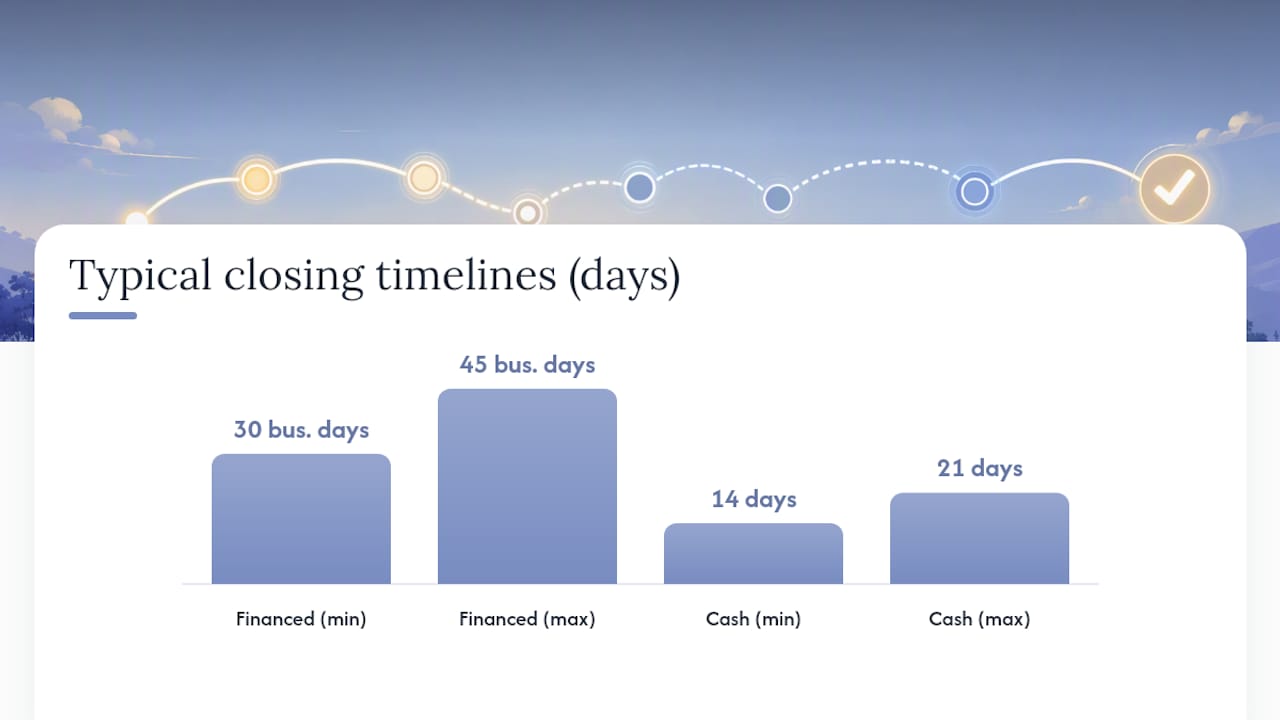
Financed deals typically close in 30 to 45 business days, while cash purchases often wrap up in 14 to 21 days. That gap matters for what you can realistically offer.
- Check your contract’s closing-date wording before you negotiate anything
- Ask your agent what flexibility the other side actually needs
- Confirm your lender’s timeline before promising a new date
Key Takeaways
A flexible closing date works because it removes the biggest source of risk in a home sale: uncertainty about when everyone actually has to move.
| Point | Details |
|---|---|
| Know your baseline timeline | Financed deals run 30 to 45 business days; cash deals often close in 14 to 21 days. |
| Get changes in writing | A closing date can only change with a signed amendment from buyer, seller, and lender. |
| Watch the TRID clock | Loan term changes can trigger mandatory re-disclosure waiting periods before closing. |
| Use rent-backs, not open dates | A short, defined rent-back protects both sides better than an indefinite possession promise. |
| Consider a cash buyer for speed | Decostabuyshomes offers cash purchases with flexible closing timelines and no lender delays. |
Where to Verify Timelines and Terms
- Zillow’s closing timeline guide for typical financed and cash closing windows
- Chase’s guidance on moving a closing date for lender and re-disclosure rules
- An escrow closing date calculator for estimating buffer days around inspections and holidays
- The Herndon Home Guide’s transaction timeline breakdown for who to notify and when
This article is general information, not a substitute for advice from a qualified lawyer. Consult a qualified legal professional about your own circumstances before acting on anything here.
Table of Contents
- What a Flexible Closing Date Actually Means
- Closing Timelines and How Lenders Affect Them
- How Buyers Can Offer Flexibility to Win an Offer
- How to Formally Change or Extend a Closing Date
- Risks and Red Flags to Watch For
- Closing-Date Checklist for Buyers and Sellers
- How Investors Use Flexible Closings to Their Advantage
- Selling with a Flexible Timeline Made Simple
- Sources
What a Flexible Closing Date Actually Means
Instead of a hard date, the contract might list a window (“on or before March 15”) or the phrase “a date mutually agreeable to both parties.” That small wording change gives either side room to adjust without renegotiating the whole deal.
Sellers usually want flexibility when they’re buying their next home contingent on this sale, waiting on new construction, or just need extra weeks to pack up a house they’ve lived in for decades. Buyers often need it when they’re selling their current home first, finishing a lease, starting a new job, or waiting on a lender to clear final conditions.
- A seller with a contingent purchase asks for a 60 day window instead of 30
- A buyer waiting on a lease to end offers to close whenever works for the seller
- A relocating employee needs the closing pushed two weeks to match a start date
Closing Timelines and How Lenders Affect Them
Timelines aren’t arbitrary. Financed purchases run 30 to 45 business days because underwriters need time for appraisal, title work, and final loan approval. Cash deals skip most of that, which is why they often close in 14 to 21 days, and some escrows move even faster when everyone is organized.
Pushing a closing date later can force a rate lock extension, and those extensions sometimes carry a fee your lender will pass on to you. Moving the date can also trigger TRID re-disclosure rules if the loan terms change, and that disclosure window can add mandatory waiting days nobody accounted for.
Changing a date isn’t a two-person conversation. It requires notifying, in rough order:
- Your lender, to confirm rate lock status and re-disclosure timing
- The title and escrow company, to reissue documents and update the closing package
- Both agents, to keep everyone working from the same date
- Your insurance provider, so coverage starts on the right day
How Buyers Can Offer Flexibility to Win an Offer
Price isn’t the only thing sellers weigh. A buyer who matches a seller’s timing needs can beat a higher offer, because solving a seller’s logistics problem is worth real money to someone stressed about where they’ll live next.
A few tactics work especially well. Offering a closing window (“any date between the 10th and the 25th”) rather than a single date gives the seller room to plan around it. A rent-back arrangement, where the seller stays for one to two weeks after closing in exchange for a daily fee, is another common structure that lets sellers finish moving without holding up your purchase. Flexible possession dates, where you close but delay taking keys by a few days, accomplish something similar with less paperwork than a full rent-back agreement.

The trade-off is straightforward: the more flexibility you offer, the longer you might wait to move in. That’s usually a fair price to pay in a competitive market.
Pro Tip: Before you write your offer, have your agent simply ask the listing agent what the seller needs. A one-sentence question often reveals exactly which terms will win the deal.
How to Formally Change or Extend a Closing Date
Verbal agreements don’t hold up. Changing a closing date always requires written mutual agreement from the buyer, seller, and often the lender.
- Review your contract’s closing-date and extension clauses
- Call your lender to check rate lock expiration and re-disclosure timing
- Draft a written amendment specifying the new date
- Get signatures from both buyer and seller
- Send the signed amendment to escrow and title to update instructions
- Confirm your homeowner’s insurance start date matches the new closing
Sample amendment language might read: “Buyer and Seller agree to extend the closing date from [original date] to [new date]. All other terms of the original agreement remain unchanged.” Add a hard deadline and, if appropriate, a daily extension fee to discourage further delays.
- Confirm inspection and repair deadlines still make sense against the new date
- Clarify who holds possession and when keys transfer
Risks and Red Flags to Watch For
Open-ended language is the biggest danger. Phrases like “whenever buyer is ready” with no outside date can leave a seller stuck for months, and courts generally won’t enforce a deadline that was never written down.
Watch for these warning signs:
- No signed written amendment, just a text message or phone call
- A closing pushed past your rate lock expiration with no extension plan
- A lender who hasn’t confirmed the new timeline can actually close
- Title or insurance gaps between the old and new closing dates
If the sale falls apart because of a missed date, both sides can lose earnest money or face legal exposure. Set a hard latest date even when you’re offering flexibility, and consider a per-day fee for extensions past that point.
Pro Tip: A short, defined rent-back (one to two weeks, with a daily rate spelled out in writing) protects both parties far better than an open-ended “stay as long as you need” promise.
Closing-Date Checklist for Buyers and Sellers
Before you agree to any date change, confirm these items with your agent, lender, and title company:
- Buyers: rate lock expiration, lender approval status, inspection contingency deadlines, moving logistics
- Sellers: possession window, contingency on their next purchase, storage and move-out timing
- Both sides: notify title company, lender, escrow officer, and utility providers, and get the amendment in writing before you tell anyone the date has changed
How Investors Use Flexible Closings to Their Advantage
Professional buyers treat closing flexibility as a tool, not an afterthought. Matching a seller’s exact timeline, rather than pushing the fastest possible close, often closes the deal faster because it removes the seller’s biggest source of stress.
When a seller needs three extra weeks to find a new place, or wants to close in ten days because they’ve already moved, that flexibility is often worth more to them than an extra few thousand dollars. Sellers who need speed and certainty over a slightly higher number generally do better working with a buyer who can bend the calendar to fit their life, not the other way around.
If your situation is complicated, a cash buyer who doesn’t need lender approval can often adapt faster than a financed buyer boxed in by underwriting timelines.
A Publisher’s Take on Flexible Closings
Travis here. In years of watching deals come together and fall apart, the pattern is consistent: the side that asks “what do you actually need?” before making an offer usually wins. Be flexible on the calendar, but never flexible on getting it in writing.
Selling with a Flexible Timeline Made Simple
If you’ve read this far, you already know that flexibility only works when it’s backed by someone who can actually deliver on it. That’s the real advantage of working with a cash buyer like Decostabuyshomes: no lender to clear, no rate lock to worry about, no TRID re-disclosure clock running. Decostabuyshomes buys homes in as-is condition, covers closing costs, and builds the closing date around what actually works for you, whether that’s ten days or ten weeks.
Whether you’re weighing selling as-is versus fixing up first, or you just want to know what sellers should know before signing anything, the first call costs nothing and puts a real closing date on the table within days. Reach out to Decostabuyshomes to walk through your timeline and get a straight answer on what’s possible.
Sources
- How long does it take to close on a house? | Zillow
- Can You Move Up or Extend Your Closing Date? | Chase
- Escrow closing date calculator – Calculatorzilo
- How flexible closing terms won a Grand Rapids buyer their home | Pohlonski Real Estate Blog