
In a subject-to real estate transaction, the buyer receives the deed and takes ownership of the property while the seller’s existing mortgage stays in the seller’s name. The buyer agrees to make the mortgage payments, but the loan is never formally transferred or assumed. Rocket Mortgage describes it plainly: no new mortgage application, no credit check, no lender underwriting.
The bottom line: subject-to deals can be genuinely useful when a seller needs to exit fast, avoid foreclosure, or preserve a favorable loan rate for a buyer, but they carry real legal exposure for sellers that most people underestimate. Before signing anything, both parties should consult a real estate attorney and a title company. Sellers who are behind on payments should also contact their mortgage servicer first to explore official loss-mitigation options through the CFPB before pursuing a private creative deal.
Key Takeaways
A subject-to transaction transfers the deed to the buyer while the seller’s mortgage stays in the seller’s name, creating real legal exposure for the seller that only careful contract drafting and third-party servicing can mitigate.
| Point | Details |
|---|---|
| Deed and note are separate | The buyer owns the property; the seller remains legally liable for the mortgage debt. |
| Due-on-sale risk is real | Lenders can accelerate the loan when ownership transfers; enforcement is discretionary but not impossible. |
| Third-party servicing protects sellers | A loan servicer remitting payments in the seller’s name provides a paper trail and protects the seller’s credit. |
| Explore official options first | CFPB and HUD both recommend contacting the mortgage servicer before pursuing any private creative deal. |
| Decostabuyshomes evaluates every deal | Decostabuyshomes uses a structured checklist covering loan terms, title, arrears, and seller understanding before any subject-to offer is made. |
Table of Contents
- How a subject-to deal actually works: deed, payments, and closing mechanics
- How subject-to compares to assumable mortgages and seller financing
- What the due-on-sale clause actually means for both parties
- Pros and cons for buyers and sellers
- How to structure and close a subject-to deal safely
- How investors source subject-to opportunities
- Red flags and essential questions to ask before signing
- When a different path makes more sense than subject-to
- How Decostabuyshomes evaluates subject-to opportunities
- The part of subject-to that most guides get wrong
- Decostabuyshomes works with sellers who need real options, not one-size-fits-all offers
- Sources
How a subject-to deal actually works: deed, payments, and closing mechanics
The mechanics hinge on one distinction that most people miss: the deed and the promissory note are two separate documents. LegalClarity explains the separation clearly: the deed conveys ownership to the buyer, but the promissory note and the legal liability for the loan remain with the original borrower. The seller’s name stays on the mortgage. The buyer owns the house and makes the payments, but has no formal obligation to the lender.
Here is how a typical closing sequence unfolds:
- Purchase agreement: The contract includes an express “subject to” clause stating the buyer is not assuming the loan. It specifies how arrears and junior liens will be handled, who maintains insurance, and what happens if the buyer defaults.
- Title search: A title company or real estate attorney reviews the chain of title, identifies all liens, HOA obligations, and tax delinquencies, and confirms the seller has the right to convey.
- Deed execution and recording: The seller signs a warranty deed or quitclaim deed transferring ownership to the buyer. The deed is recorded with the county recorder’s office.
- Payment flow setup: The buyer either pays the seller directly (who then remits to the servicer) or, better, routes payments through a third-party loan servicer that remits in the seller’s name and sends monthly statements to both parties.
- Insurance and escrow: The buyer must maintain a homeowner’s insurance policy naming the lender as mortgagee. If the existing loan has an escrow account for taxes and insurance, the buyer funds it going forward.
- HUD/state disclosures: Depending on the state, additional disclosures may be required. A real estate attorney familiar with local rules is the right person to confirm which apply.
Pro Tip: Use a third-party loan servicer such as Dovenmuehle, Madison Management Services, or a local escrow company to handle payment remittance. This creates a paper trail, protects the seller’s credit, and removes the risk of the buyer paying late or skipping months without the seller knowing.
The document checklist for closing:
- Purchase agreement with subject-to clause
- Warranty deed or quitclaim deed
- Title commitment and title insurance policy
- Proof of homeowner’s insurance (with correct mortgagee clause)
- Payoff statement or loan statement from the existing servicer
- Any state-required disclosures
- Third-party servicing agreement
- Authorization letter allowing the buyer to communicate with the servicer
How subject-to compares to assumable mortgages and seller financing
These three structures are frequently confused, and the differences matter enormously for legal liability and deal feasibility.
Key distinctions worth understanding:
- Subject-to vs. assumption: A true mortgage assumption transfers the loan liability to the buyer after lender underwriting and approval. When the lender approves the assumption and releases the seller, the seller’s credit and legal exposure end. Subject-to skips lender involvement entirely, which is faster but leaves the seller on the hook indefinitely.
- Assumable loans: FHA and VA loans are generally assumable, subject to lender approval. Conventional loans almost never are. If an assumable loan is available and the seller wants a clean exit, assumption is usually the safer path.
- Seller financing (carryback): The seller acts as the lender, carrying a note secured by the property. This works when the seller owns the home free and clear or has substantial equity. A wrap-around mortgage layers a new seller-financed note on top of an existing mortgage, which creates its own due-on-sale risk.
- Decision prompt: A seller facing imminent foreclosure who cannot wait for lender approval often has no practical option except subject-to or a cash sale. An investor who wants to avoid a large down payment and inherit a below-market interest rate is the classic subject-to buyer. A seller who wants complete liability relief and has an FHA or VA loan should push for a formal assumption instead.
What the due-on-sale clause actually means for both parties
The due-on-sale clause is the primary legal hazard in any subject-to transaction. Nearly every conventional mortgage contains one. It gives the lender the right to demand full repayment of the loan balance the moment ownership of the property transfers to someone else. LegalClarity notes that enforcement is discretionary but real: lenders do not always accelerate, but they have the contractual right to do so.
The federal Garn–St. Germain Depository Institutions Act of 1982 codified lenders’ right to enforce due-on-sale clauses in most residential mortgage contracts. It also carved out specific exceptions, such as transfers to a spouse or child upon the borrower’s death, but a standard investor purchase does not qualify for any of those exceptions. The practical reality is that many lenders do not monitor ownership transfers closely, especially when payments are current. But “they probably won’t notice” is not a legal protection.
Seller exposure is the part of this transaction that most articles understate. If the buyer stops making payments, the lender reports the delinquency against the seller’s credit. If the buyer abandons the property, the lender can foreclose on a house the seller no longer owns. The seller has no direct control over any of it.
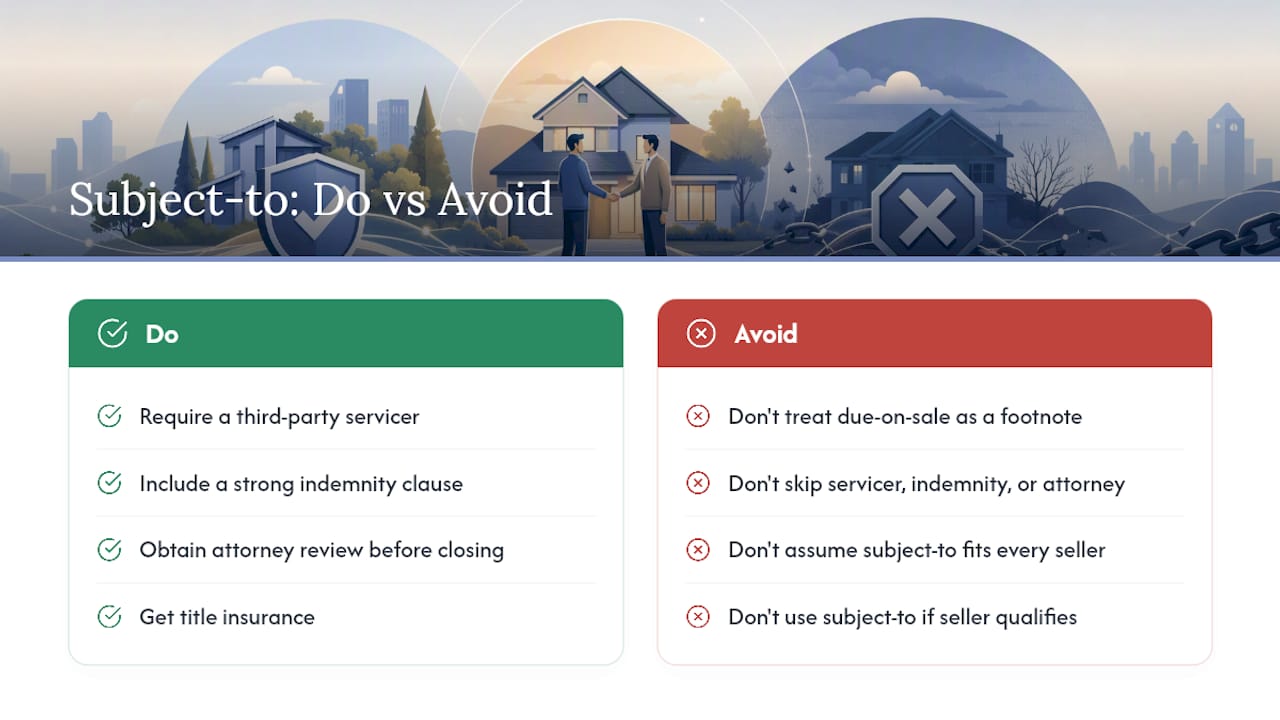
Pro Tip: Require an indemnity and cure clause in the purchase agreement. This obligates the buyer to cure any default within a defined period (typically 30 days) and indemnifies the seller against any costs arising from the buyer’s failure to pay. It does not eliminate the risk, but it creates a contractual remedy.
Additional legal and insurance complications:
- When the deed and the note diverge, the buyer’s insurable interest and the lender’s mortgagee interest must both be covered. If the buyer lets the policy lapse or fails to name the lender correctly, the lender can force-place expensive insurance and charge it to the escrow account, as LegalClarity details.
- State-specific rules on deed recording, transfer taxes, and disclosure requirements vary. What is standard practice in Texas may require additional steps in California or New York. A local real estate attorney is not optional here.
- Sellers should also know that HUD and FHA encourage lenders to work with borrowers to avoid foreclosure. If the seller is behind on payments, contacting the servicer directly before signing a subject-to agreement may surface a loan modification or forbearance that removes the need for a creative deal entirely.
Pros and cons for buyers and sellers
Benefits for buyers:
- Fast closing, often in days rather than weeks, with no lender underwriting
- Access to the seller’s existing interest rate, which can be significantly below current market rates
- Low upfront capital requirement compared to a conventional purchase
- No credit check or debt-to-income qualification with the lender
- Ability to acquire properties that would not qualify for conventional financing due to condition
Benefits for sellers:
- Quick exit from a property, potentially avoiding foreclosure and its credit consequences
- No agent commissions if sold directly
- Possible relief from ongoing mortgage payments immediately after closing
- Flexibility on closing timeline and terms
Major downsides for sellers:
- The mortgage stays in the seller’s name. If the buyer defaults, the seller’s credit suffers and the lender can foreclose. Rocket Mortgage is direct about this risk: the seller remains legally responsible for the debt even after transferring the deed.
- The seller may struggle to qualify for a new mortgage because the existing loan still appears on their credit report as an active liability.
- The seller has no direct control over whether payments are made on time.
- The lender can accelerate the loan at any point if it discovers the ownership transfer.
Major downsides for buyers:
- Lender acceleration is a real possibility. If the lender calls the loan due, the buyer must refinance or sell quickly.
- Insurance complications arise when the deed and note are held by different parties.
- The buyer builds equity in a property where the seller still holds the underlying liability, which can create complications if the seller files for bankruptcy or has other judgment creditors.
- U.S. News flags that subject-to is distinct from a loan assumption and carries persistent seller liability, a point that both parties should understand before closing.
How to structure and close a subject-to deal safely
A well-structured subject-to deal requires more than a handshake and a deed. Here is the full execution sequence:
1. Initial due diligence
Confirm the loan balance, interest rate, monthly payment, escrow status, and whether the loan is current or in arrears. Pull the seller’s mortgage statement and verify the servicer’s name and contact information.
2. Title search and lien review
Order a full title search through a licensed title company. Identify every lien: the first mortgage, any second mortgage or HELOC, HOA liens, mechanic’s liens, and tax delinquencies. LegalClarity warns that “subject to” language in deeds can conceal encumbrances, so exhaustive title review is non-negotiable. For properties with liens, the guide on selling a house with liens covers the key considerations.
3. Negotiate arrears and junior liens
Decide in writing who pays any mortgage arrears, back taxes, HOA dues, or junior liens before or at closing. PropStream notes that these items materially affect deal feasibility and must be resolved before the purchase agreement is finalized.
4. Draft the purchase agreement
The contract must include:
- An express subject-to clause: “Buyer is purchasing the property subject to the existing mortgage held by [Lender], Loan No. [XXXX], with a current balance of approximately $[AMOUNT]. Buyer is not assuming said mortgage and shall not be personally liable to Lender.”
- Indemnity and cure provisions obligating the buyer to cure any default within 30 days and indemnify the seller against losses.
- Servicing and reporting terms: buyer agrees to use a named third-party servicer and provide monthly statements to the seller.
- Insurance requirements: buyer must maintain a homeowner’s policy naming [Lender] as mortgagee and provide proof of coverage annually.
- Tax and HOA obligations: buyer is responsible for all property taxes, HOA dues, and assessments from the closing date forward.
- Default remedies: what happens if the buyer fails to pay, including the seller’s right to cure and reclaim the property.
5. Escrow and title closing
Close through a licensed title company or real estate attorney. They handle deed preparation, recording, proration of taxes and insurance, and issuance of a title insurance policy.
6. Record the deed
The deed must be recorded with the county recorder’s office promptly after closing. Delayed recording creates gaps in the chain of title and can expose both parties to additional risk.
7. Establish the payment system
Set up the third-party servicer before the first payment is due. Confirm the servicer will remit in the seller’s name, send monthly statements to both parties, and report payment history to the credit bureaus under the seller’s loan account.
Closing-item checklist for the title company or attorney:
- Confirm all liens are identified and addressed
- Verify the deed is correctly executed and notarized
- Confirm the mortgagee clause on the insurance policy matches the lender’s name exactly
- Confirm escrow account funding for taxes and insurance
- Verify the third-party servicing agreement is signed before closing
- Record the deed same day or next business day
How investors source subject-to opportunities
Subject-to deals do not come from the MLS. They come from motivated sellers who need speed, flexibility, or relief that a conventional buyer cannot provide. Business Insider’s coverage of creative financing highlights that investors using subject-to typically find their deals through direct outreach rather than listed inventory.
Reliable lead channels:
- Pre-foreclosure lists: County courthouse records and online databases list properties with recorded notices of default or lis pendens. These sellers often have limited time and limited options.
- Direct mail to owners behind on payments: Data providers can identify homeowners with mortgage delinquencies. A direct mail campaign explaining the subject-to option and its protections reaches sellers before they are in full foreclosure.
- Probate and inherited-home leads: Heirs who inherit a property with an existing mortgage and no desire to keep it are natural subject-to candidates.
- Expired listings: A property that sat on the market and did not sell may have a seller who is now more open to creative terms.
- Agent referrals: Agents who work with distressed sellers sometimes refer deals that do not fit a conventional listing.
Ethical outreach matters. Sellers in financial distress are vulnerable. Transparent communication about what subject-to means, including the seller’s ongoing liability, is not just ethically required, it is legally important. Recommend that the seller consult an independent attorney before signing. Pressure tactics or misrepresentation in this context can expose the buyer to fraud claims.
Screening criteria before making an offer:
- Loan terms: interest rate, remaining balance, monthly payment, and whether the rate is fixed or adjustable
- Equity position: enough equity to make the deal workable, but not so much that the seller would be better served by a conventional sale
- Escrow status: are taxes and insurance current, or are there delinquencies that need to be resolved?
- Title condition: any junior liens, HOA arrears, or recorded judgments that complicate the deal
- Seller urgency and alternatives: does the seller have time to explore other options, or is foreclosure imminent?
Red flags and essential questions to ask before signing
Red flags that should stop a deal:
- No title insurance available or the title company declines to insure
- Multiple junior liens with unclear payoff amounts
- Recent bankruptcy filing by the seller (the automatic stay and trustee involvement complicate any transfer)
- Loan documents with aggressive due-on-sale language and a lender known for active enforcement
- Seller unwilling to allow third-party servicing
- Inconsistent or missing payment history on the existing loan
- Property taxes or HOA dues significantly delinquent with no plan to cure
Essential questions for sellers to ask the buyer:
- How will you make payments, and through which servicer?
- Who guarantees payments if you cannot make them?
- What insurance coverage will you maintain, and will you name the lender as mortgagee?
- What is your exit strategy, and when do you plan to refinance or sell?
- Will you provide monthly servicing statements?
Essential questions for buyers to ask the seller:
- What liens exist on the property, and are all of them current?
- Are property taxes and HOA dues current?
- Do you have the legal right to sell, and is there any recorded power of attorney, probate proceeding, or prior forbearance agreement that affects the title?
- Has the lender been notified of any prior transfer attempts?
- Are there any active code violations, permits, or municipal liens?
Pro Tip: Before closing, pull a current payoff statement directly from the servicer and verify it matches what the seller has represented. Discrepancies between the seller’s stated balance and the servicer’s actual payoff figure are a common source of deal problems.
Seller protection checklist:
- Require a third-party servicer and written monthly statements
- Require escrow for property taxes and insurance
- Include clear default and cure language with defined timelines
- Require the buyer to carry adequate homeowner’s insurance with the correct mortgagee clause
- Retain a copy of the recorded deed and all closing documents
When a different path makes more sense than subject-to
Subject-to is a tool, not a default. Several situations call for a different approach entirely.
When refinance or loan modification is the better move for a seller:
If the seller can still qualify for a refinance or if the lender offers a modification, forbearance, or repayment plan, those options eliminate the ongoing liability that subject-to creates. The CFPB recommends contacting the mortgage servicer first to explore these options before pursuing any private arrangement. HUD similarly encourages lenders to work with borrowers on workout packages that can include temporary payment reductions or extended repayment plans.
When a deed in lieu, short sale, or cash sale is the right path:
A seller in severe distress with little or no equity may be better served by a deed in lieu of foreclosure (negotiated directly with the lender) or a short sale. Both options end the seller’s liability cleanly, though they carry their own credit consequences. A direct cash sale to an investor is often faster than a subject-to deal and eliminates the seller’s ongoing exposure entirely. For sellers weighing these options, the guide on selling a house as-is covers the practical steps.
When a formal mortgage assumption is superior:
If the existing loan is FHA or VA and assumable, and the seller’s priority is a clean exit from liability, pushing for a formal assumption with lender approval is worth the extra time. The buyer qualifies with the lender, the lender releases the seller, and the seller’s credit exposure ends at closing.
When seller financing works better for a buyer:
If the seller owns the property free and clear or has substantial equity, seller financing gives the buyer similar benefits (no bank underwriting, flexible terms) without the due-on-sale risk. The seller carries the note, the buyer makes payments directly, and no existing lender is involved.
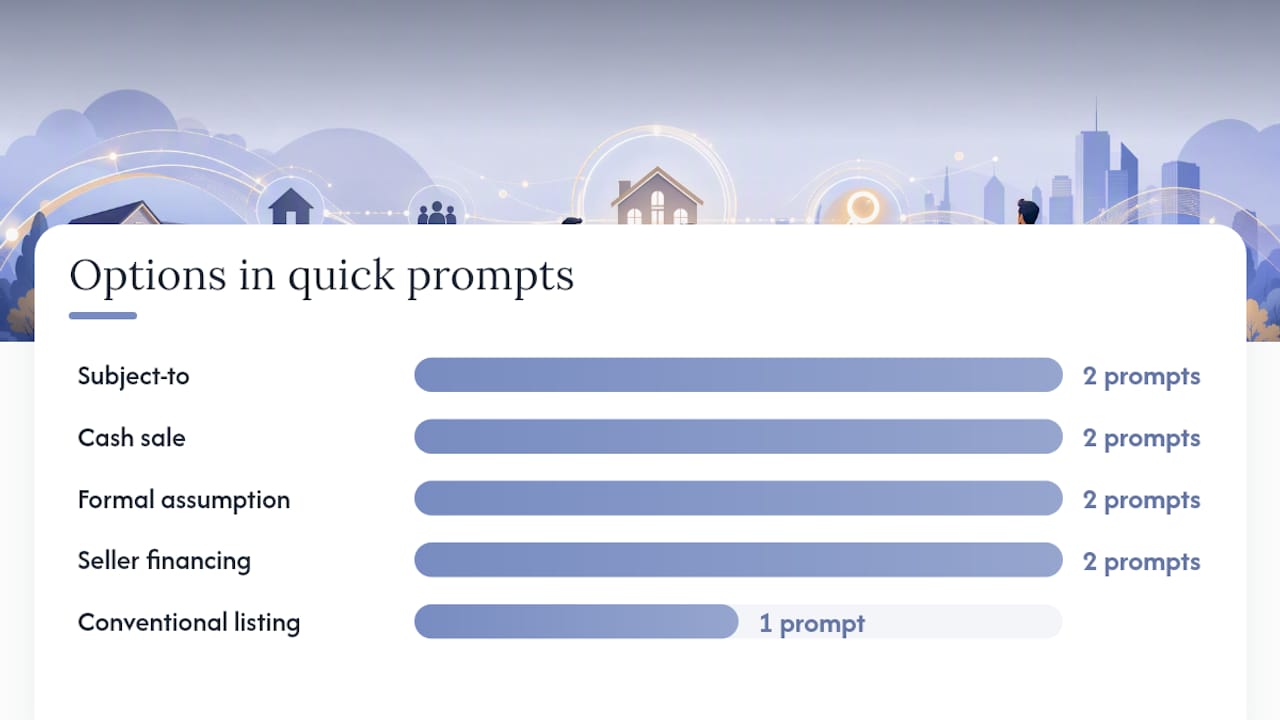
Quick decision prompts:
- Seller behind on payments, foreclosure imminent, wants fast exit: subject-to or cash sale
- Seller wants complete liability relief: formal assumption (if available) or cash sale
- Seller has equity and no mortgage: seller financing or conventional listing
- Buyer wants low upfront cost, no underwriting: subject-to or seller financing
- Buyer wants lender-approved transfer: formal assumption
How Decostabuyshomes evaluates subject-to opportunities
Decostabuyshomes approaches subject-to acquisitions with a structured underwriting process built around one principle: the deal has to work for the seller and the investor, or it does not close.
Sourcing and screening workflow:
- Leads come from pre-foreclosure lists, direct mail, agent referrals, and direct-to-seller marketing
- Initial call confirms the seller’s situation, urgency, loan terms, and whether the property has junior liens or tax delinquencies
- A preliminary title search is ordered before any offer is made
Decostabuyshomes’ subject-to evaluation checklist:
- Loan terms: interest rate, balance, monthly payment, and escrow status confirmed against the servicer’s statement
- Arrears: total amount of mortgage arrears, back taxes, and HOA dues quantified and addressed in the purchase agreement
- Title condition: all liens identified, junior liens negotiated or paid at closing
- Insurable interest: confirmed that a homeowner’s policy can be placed with the correct mortgagee clause
- Property condition: repair cost estimate completed before offer; exit strategy (fix-and-flip, rental, wholesale) confirmed
- Seller understanding: seller has reviewed the subject-to terms with an independent attorney or has been given the opportunity to do so
Operational safeguards on every subject-to deal:
- Third-party loan servicer engaged before closing
- Escrow for property taxes and insurance funded at closing
- Attorney review of the purchase agreement and deed
- Monthly servicing statements sent to the seller for the life of the loan
State-specific rules on deed recording, transfer taxes, and disclosure requirements vary across U.S. jurisdictions. Readers in New York, Virginia, Minnesota, and other states should confirm local requirements with a licensed real estate attorney. Decostabuyshomes works with local counsel in each market it operates in.
This article is general information, not legal or financial advice. Confirm current rules with a licensed real estate attorney or qualified professional in your state before proceeding with any subject-to transaction.
The part of subject-to that most guides get wrong
Most articles about subject-to real estate spend the bulk of their words on the mechanics and the upside. The due-on-sale clause gets a paragraph. Seller liability gets a bullet point. That is backwards.
The mechanics of a subject-to deal are not complicated. Transfer the deed, keep the loan, set up a servicer, get title insurance. Any competent real estate attorney can walk you through the paperwork in an afternoon. What is genuinely hard, and what most guides treat as a footnote, is the seller’s ongoing exposure after closing.
A seller who signs a subject-to agreement and hands over the deed has essentially handed a stranger the keys to their credit score and their foreclosure risk. If the buyer stops paying six months later, the seller finds out when a collection notice arrives. The seller no longer owns the house, cannot sell it, and cannot force the buyer to pay. The only remedy is the contract, which means the only protection is the quality of the contract drafted before closing.
This is why the third-party servicer, the indemnity clause, and the attorney review are not optional extras. They are the entire risk-management framework. An investor who skips them to close faster is not being efficient. They are transferring risk onto a seller who may not fully understand what they agreed to.
The other thing most guides understate: subject-to is not the right tool for every motivated seller. A seller who qualifies for a loan modification or a forbearance plan is almost always better served by that path. A seller with a VA or FHA loan who has time to wait for a formal assumption gets a clean exit that subject-to cannot provide. Subject-to makes the most sense in a narrow set of circumstances: the seller needs speed, the seller cannot qualify for official relief, and the buyer can genuinely service the loan and protect the seller’s credit. When those three conditions are met, it is a legitimate and useful transaction. When they are not, there are better options.
Decostabuyshomes works with sellers who need real options, not one-size-fits-all offers
Sellers facing foreclosure, inherited properties, or properties with complicated title situations do not always have the luxury of a 90-day listing process. Decostabuyshomes works directly with homeowners across the United States to evaluate every available path, including subject-to arrangements, direct cash purchases, and novation agreements, and recommends the one that actually fits the seller’s situation.
The difference is in the underwriting. Every deal goes through a structured evaluation: loan terms, title condition, arrears, repair costs, and exit strategy are all confirmed before an offer is made. Sellers get a clear explanation of what each option means for their credit, their timeline, and their legal exposure. If a subject-to deal is the right fit, Decostabuyshomes handles the servicing setup, attorney review, and closing logistics. If a direct cash offer is the cleaner path, that option is on the table too.
Whether you are a homeowner weighing your options or an investor looking to partner on deals, start by reviewing what cash home buyers actually offer and then reach out to Decostabuyshomes directly at Decostabuyshomes to discuss your specific situation.
This article is general information, not a substitute for advice from a qualified financial advisor. Consult a qualified financial professional about your own circumstances before acting on anything here.
Sources
These are the primary sources that back the legal and practical claims in this guide:
- What is ‘subject to’ in real estate? | Rocket Mortgage
- If I can’t pay my mortgage loan, what are my options? | CFPB
- Avoiding foreclosure: contact your lender | HUD
- What Is Subject To in Real Estate? | PropStream
- What Is Subject-to Financing, the Creative Real-Estate Investing Strategy – Business Insider
- Is Buying or Selling ‘Subject To’ a Good Idea? | Real Estate | U.S. News